Explore Karm Kand Services in India — Karm Kand Puja, Vidhi, rituals, choosing a Karm Kand Pandit, and what affects the cost of a Hindu ceremony.
Karm Kand Services cover the ritual side of Hindu practice — the ceremonies a family arranges for an occasion, a milestone or a remembrance. In practice, they range from puja and havan to Shraddha, Pind Daan, Grah Shanti and the sanskars that mark stages of life, each performed according to established procedure and the customs a family or community follows.
Families hold these ceremonies at a temple, at home, at a pilgrimage site, or arrange them online. In addition, many providers supply the samagri and put the family in touch with priests experienced in that particular rite.
Therefore, if you are arranging a ceremony, knowing what to expect makes the day considerably easier. Which puja is appropriate? Which Karm Kand Pandit should perform it? What samagri is needed, and what should you expect to pay? These questions come up constantly, particularly when the ceremony is being arranged in a city you do not live in. This guide covers the main types of Karm Kand Services, what the Karm Kand Vidhi involves, what affects the cost, and how to book without unpleasant surprises.
What Are Karm Kand Services?
Karm Kand Services cover the ritual practices and ceremonies that Hindu tradition prescribes. In practice that means prayers, offerings, mantras, havan, ancestral ceremonies and the various family sanskars. The exact procedure changes according to the rite itself, the region, the family's tradition, the community and the reason for holding the ceremony.
Providers in places such as Haridwar and Varanasi generally cover puja, havan, Shraddha, Pind Daan, Pitru Karm and other traditional ceremonies. The purpose is not simply to complete a sequence of steps. For most families these ceremonies are a way of keeping a connection to their traditions and marking important occasions properly.
Similarly, a knowledgeable priest explains what the ritual means, sets the order of mantras and offerings, and tells family members when and how they should take part. That guidance matters most when the ceremony involves procedures that are difficult to arrange without having done them before.
Importance of Karm Kand Vidhi
Karm Kand Vidhi is the prescribed method for a particular ritual. Depending on the ceremony it can include preparing the place of worship, the sankalp, invoking the deities, reciting mantras, making offerings, performing the havan, and the concluding prayers.
However, the vidhi is not the same for every puja. Hindu rituals differ substantially by tradition and by occasion. Therefore a good priest walks through the main stages beforehand rather than assuming the family already knows. Established providers usually arrange the pandit, the muhurat, the samagri and the flowers as part of the booking itself.
Types of Karm Kand Services in India
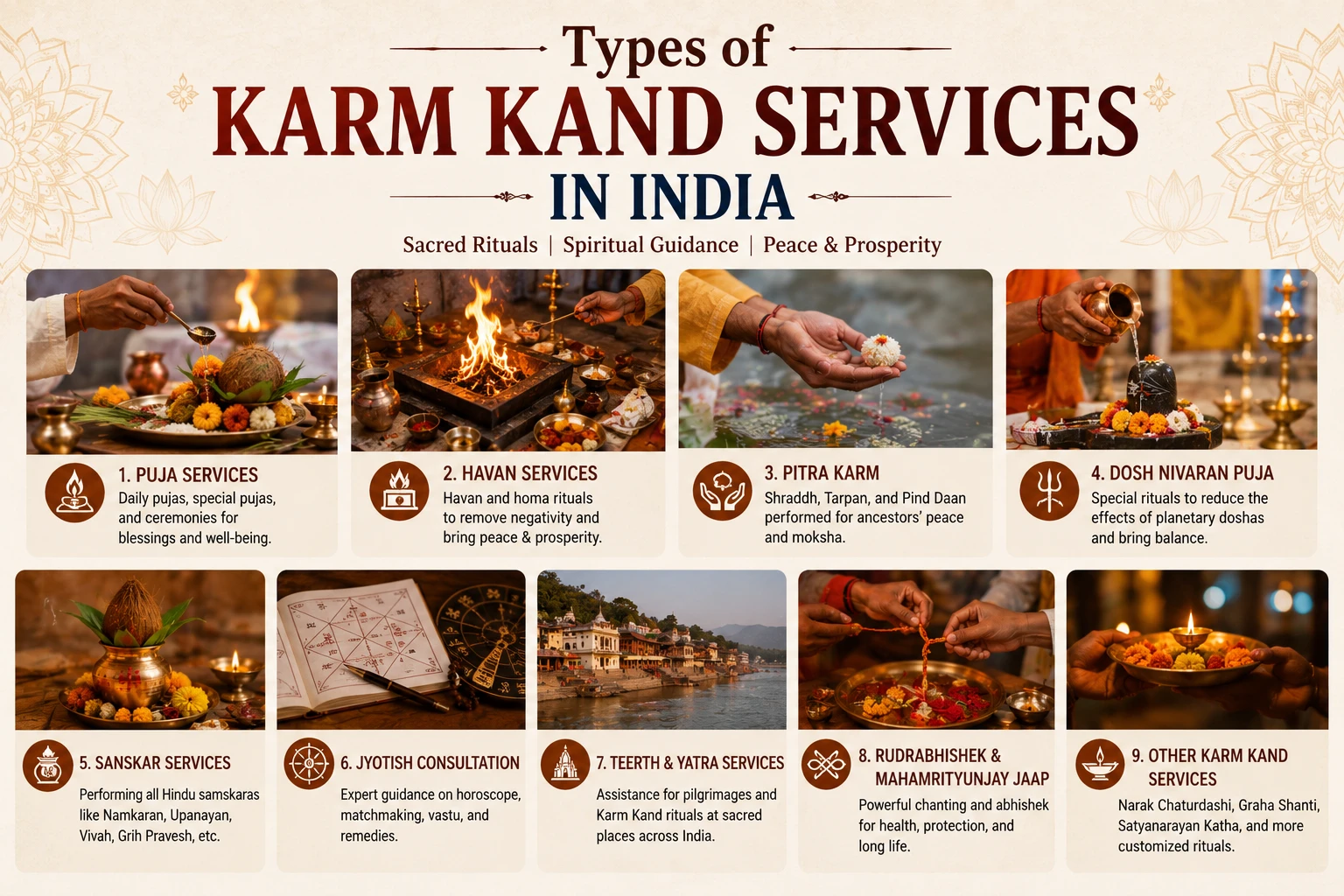
Because religious practice varies so widely across India, Karm Kand Services cover a broad range of ceremonies. Although the list is long, most families need only one or two. Which one is appropriate depends on the reason for the ceremony and on the family's customs. Some are held at home; others are traditionally tied to particular pilgrimage sites.
Karm Kand Puja and Havan
Karm Kand Puja can involve several forms of worship — mantra recitation, havan and devotional offerings. Frequently requested ceremonies include Grah Shanti, Rudrabhishek, Mahamrityunjaya Jaap, Navagraha rituals and Satyanarayan Puja, among others. What each requires depends on its purpose and on the tradition being followed. Many providers offer both at-home and online ceremonies, with the samagri arranged for you.
Also, havan forms part of a great many ceremonies. The priest prepares a sacred fire, recites the mantras, and makes the offerings into the fire as the rite requires. If you are booking, ask specifically whether the package includes the havan kund, the samagri, flowers, seating and the other materials the ceremony needs.
Pitru and Shraddha Rituals
Next, ancestral ceremonies form another significant group of Karm Kand Rituals. Families commonly arrange Shraddha, Pind Daan, Asthi Visarjan and other Pitru rites at Haridwar, Rishikesh, Varanasi and Gaya. Providers in those towns assist families who travel specifically to perform them.
These rites follow detailed procedures, so confirm the specifics well in advance:
- which family records you need to bring
- the names and gotra required for the sankalp
- how many family members will attend
- exactly which ceremony you are booking
- whether the provider arranges travel or on-site assistance
If the rite follows a particular family tradition, moreover, tell the priest before the date rather than on the day. Our guide to pind daan services in India covers the ancestral rites in more detail.
Sanskar and Family Ceremonies
Hindu Karm Kand Services also cover the sanskars that mark stages of family life. Depending on the provider and the region these can include Namkaran, Annaprashan, Upanayan, Vivah rituals and Griha Pravesh. Vedic ritual providers across India arrange these, sometimes in a particular language or according to a specific community's practice.
Above all, this is where matching the priest to your customs matters most. The requirements for a South Indian ceremony often differ from those a North Indian family follows. When booking, mention your community, your regional tradition, your preferred language and the exact ceremony, so the provider assigns a priest who knows them.
How Karm Kand Rituals Are Performed
The procedure depends entirely on the ceremony. That said, most Karm Kand Rituals follow a broad sequence. First comes preparation and sankalp. Then follow the prayers, offerings and mantra recitation. Finally come the concluding rituals. The priest guides participants through each stage so the family knows when and how to take part.
Indeed, preparation is a real part of the work. The family cleans and arranges the place of worship, gathers the samagri, and the priest confirms the details — the devotee's name, gotra, the purpose of the ceremony and the muhurat where one applies. The main ritual then proceeds according to its own vidhi. Some ceremonies finish within a few hours; longer anushthans and multi-day rituals need considerably more time.
Role of a Karm Kand Pandit
Throughout, the Karm Kand Pandit leads the ceremony. The priest recites the mantras, explains the steps, performs the prescribed offerings and guides the family members taking part. Experienced providers will also arrange the samagri and coordinate the ceremony end to end, which reduces how much the family has to organise themselves.
However, when choosing a pandit, years of experience alone is not the measure. Ask whether the priest has performed your specific ceremony and knows your tradition. Confirm the language, the venue, how long it will take, how many priests are needed, what samagri arrangements are included, and whether the quoted price covers everything essential.
Karm Kand Services Cost in India
Notably, there is no single fixed price for Karm Kand Services in India. The final figure varies with the ceremony, the location, the number of priests, the samagri, the duration, travel, and whether additional rituals are included.
Booking platforms often display a starting price and explain that the final quote depends on the city, festival dates, priest availability, language, tradition and the samagri required. For that reason, ask for a full quotation rather than comparing advertised starting prices. A lower opening figure may exclude the samagri, additional priests, venue charges, travel or requirements specific to your ceremony. Ask for an itemised quote before paying anything.
| Cost factor | Why it affects the price |
|---|---|
| Type of ritual | A simple puja and an elaborate ceremony need different preparation |
| Number of pandits | Some rituals require more than one priest |
| Puja samagri | The quantity and type of materials vary by ceremony |
| Location | Prices differ between cities and pilgrimage destinations |
| Duration | Longer ceremonies need additional arrangements |
| Special muhurat | High-demand dates affect availability and pricing |
| Travel | A pandit travelling to you adds to the total |
| Additional rituals | Extra jaap, havan or daan increases the cost |
What to Confirm Before the Ceremony
In fact, most of the confusion families run into on the day comes from details nobody thought to settle in advance. Fix the date and the muhurat first, and check whether the priest is working to a calendar date or a tithi, because the two do not always fall together. Confirm the start time and how long the ceremony is expected to run, particularly if relatives are travelling in or you have booked a venue by the hour.
Second, settle the practical side. Who supplies the samagri, and does that include flowers, fruit, cloth and the havan materials? Where exactly will the ceremony be held, and what seating or fire arrangements does the space need? How many family members should be present for the sankalp, and are any of them required to fast beforehand?
Ask what the family is expected to wear, since some ceremonies have their own conventions. If elderly relatives or young children will attend, mention it — a good Karm Kand Pandit will adjust the pace and the seating rather than leaving people standing through a long recitation.
How to Book Hindu Karm Kand Services
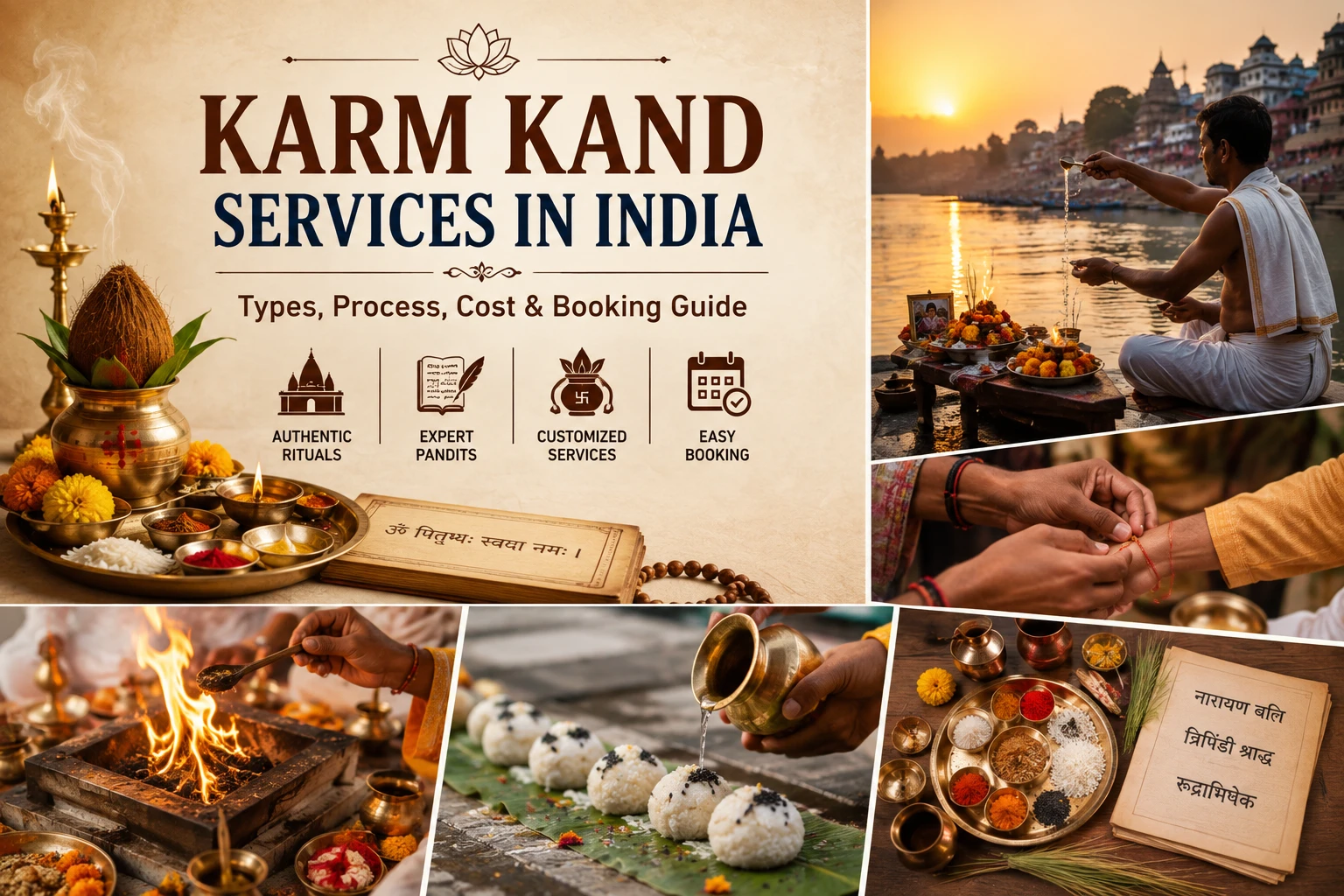
Booking Hindu Karm Kand Services has become far simpler. Priests can be found through local references, temples, dedicated providers and online platforms, and many services let you choose the ritual, city, date, language and arrangements before you receive a quote. Online booking is particularly useful for anyone living away from their home town or outside India.
Be specific about what you need. Give the provider the name of the ceremony, the date you want, the location, how many people will attend, your family tradition if it is relevant, and whether you need the samagri arranged. If the ceremony is at a pilgrimage site, ask whether transport and on-site assistance are included.
Online and Offline Booking
First, offline booking works through a temple, a local pandit, a family priest or a trusted reference. It suits families who already have an established priest or a long connection with a particular place.
On the other hand, online booking is the practical alternative. Platforms now arrange pandits, samagri and muhurat selection, and some offer ceremonies conducted online. Digital puja services have grown steadily among devotees living far from pilgrimage towns or abroad.
Choosing the Right Pandit
Ultimately, choosing the priest is the most important decision in the whole arrangement. Do not pick a service simply because it appears first in search results or quotes the lowest price. Look for clear information about the pandit's experience, the rituals they perform, the traditions they follow and what the package actually includes.
A reliable provider will answer basic questions before taking your booking: roughly how long the ceremony runs, what samagri is needed, how many pandits will attend, where it will be held, the total cost and the booking terms. If your ceremony has particular regional or family requirements, raise them early rather than on the day.
Arranging Your Ceremony
Karm Kand Services give families experienced help across a wide range of Hindu ceremonies — from Karm Kand Puja and havan through to Shraddha, Pind Daan and the family sanskars. The right Karm Kand Vidhi depends on the purpose of the ceremony, your family's tradition, the location and the priest's guidance.
Because both procedures and prices vary, confirm the full details before booking. Whether you hold the ceremony at home, travel to a sacred site, or arrange it online, take time to choose an experienced Karm Kand Pandit and set out your requirements clearly. A well-planned ceremony lets the family take part calmly.
If you would like help arranging Karm Kand Services, our team coordinates priests, samagri and muhurat across the main pilgrimage towns. See our pilgrimage packages or contact us with the ceremony you have in mind, and we will explain what the Karm Kand Vidhi involves before you commit to anything.
FAQs
What is Karm Kand Services?+
Karm Kand Services include Hindu religious rituals and ceremonies such as puja, havan, Shraddha, Pind Daan, Sanskars, and other traditional ceremonies performed with the guidance of a Pandit.
What is included in Karm Kand Puja?+
It depends on the ceremony. A package may include the Pandit, puja samagri, mantra recitation, Havan, flowers, and other required arrangements. Always confirm the inclusions before booking.
How much do Karm Kand Services cost?+
There is no universal fixed price. The cost depends on the ritual, location, number of Pandits, samagri, duration, travel, and additional ceremonies. Online providers may show starting prices, but the final quote can vary.
Can I book a Karm Kand Pandit online?+
Yes. Online platforms currently provide Pandit booking and Hindu ritual services in several Indian cities, and some also offer online ceremonies for devotees who cannot travel.
How do I choose the right Karm Kand Pandit?+
Check the Pandit's experience with your specific ritual, tradition, language, location, samagri arrangements, pricing, and reviews or references. Ask for complete service details before confirming the booking.
Share this article