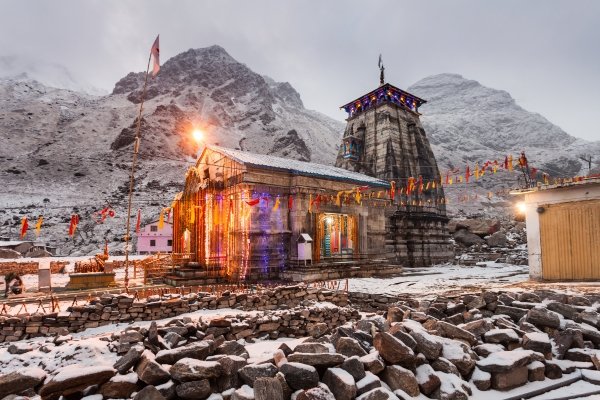
Char Dham
Yatra of Salvation
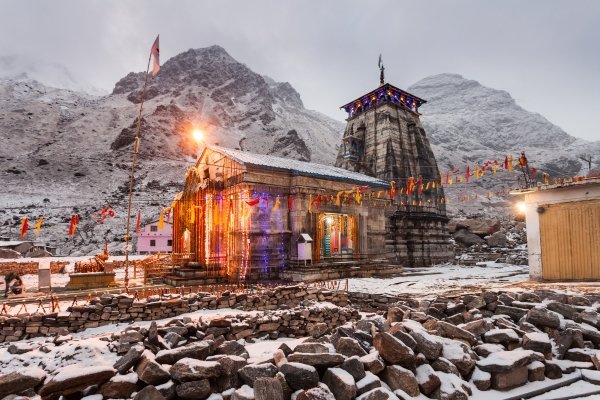
About the Destination
About Char Dham
The Char Dham Yatra of Uttarakhand; comprising Yamunotri, Gangotri, Kedarnath, and Badrinath — stands as the most sacred pilgrimage circuit within the Himalayan region and one of the most spiritually significant journeys in all of Hinduism. Unlike the broader pan-India Char Dham (which refers to Badrinath, Dwarka, Puri, and Rameswaram), the Uttarakhand Char Dham is a concentrated Himalayan circuit that takes pilgrims from the origins of sacred rivers to the very throne-rooms of the divine — all within the towering Garhwal Himalayan range. At altitudes ranging from 3,000 to over 3,600 metres above sea level, each dham presents a unique theological significance and a distinct geographic character.
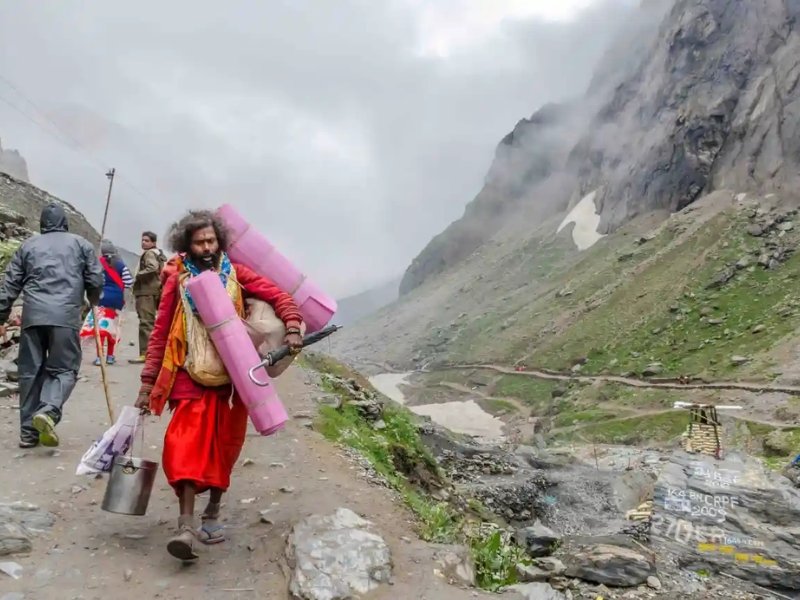
Ancient Origins
History & Mythology
The Char Dham pilgrimage finds its roots in the Vedas, the Mahabharata, and the Puranas; ancient texts that revered the Garhwal Himalayas as Devbhoomi, the Land of the Gods.
Yamunotri is sacred to Goddess Yamuna; daughter of Lord Surya and sister of Yama. Bathing at her source is believed to free devotees from untimely death. The Vamana Purana links Yamuna's dark waters to Lord Shiva's grief after Goddess Sati's passing.
Gangotri immortalises King Bhagirath's penance; performed to bring the celestial Ganga to earth and liberate his ancestors. As Ganga descended in her full cosmic force, Lord Shiva caught her in his matted locks, and the river took the name Bhagirathi in Bhagirath's honour.
Kedarnath holds the story of the Pandavas, who sought Shiva's forgiveness after the Mahabharata war. Shiva hid as a bull beneath the earth at Kedar; when found, only his hump remained above ground. That sacred hump is enshrined and worshipped in the temple to this day.
Badrinath is Vishnu's eternal meditation seat, where Goddess Lakshmi; in the form of a badri (berry) tree — sheltered him through his penance. The great philosopher-saint Adi Shankaracharya revived all four shrines in the 8th century, established the Rawal priesthood, and consecrated the circuit as a complete spiritual path.
The Narada Purana declares that completing the Char Dham Yatra grants liberation from the cycle of birth and death; a promise that has drawn millions to these mountains for centuries.
What Makes It Special
Highlights of Char Dham
Complete moksha circuit
Completing all four dhams in sequence is believed to cleanse the soul of all karmic debts and grant liberation from the cycle of rebirth.
Rivers of Life
The yatra connects you to the origin of two of India's most sacred rivers — the Yamuna at Yamunotri and the Ganga at Gangotri.
12 Jyotirlinga Connection
Kedarnath is one of the 12 Jyotirlingas — the most powerful manifestations of Lord Shiva in the physical world.
Panch Prayag Crossing
The route passes through five sacred river confluences — Devprayag, Rudraprayag, Karnaprayag, Nandprayag, and Vishnuprayag — each an ancient pilgrimage site in itself.
Natural Hot Springs
Surya Kund at Yamunotri and Tapt Kund at Badrinath are natural thermal springs where pilgrims ritually bathe before darshan.
Prasad Cooked by Nature
At Yamunotri, yatris cook rice and potatoes in the boiling Surya Kund and offer it as prasad — a ritual found nowhere else in the world.
Pitra Tarpan at Brahma Kapal
At Badrinath, performing ancestral rites at Brahma Kapal on the Alaknanda bank is considered the most meritorious act of pitra tarpan in all of Hinduism.
Mana — the last Indian Village
Near Badrinath lies Mana, the last inhabited village before the Indo-Tibet border — a living connection to India's ancient frontier and Hindu mythology.
Multiple travel Formats
Whether by foot, pony, vehicle, or helicopter — Char Dham can be undertaken by any pilgrim regardless of age or physical ability.
Winter migration of Deities
At season's end, the idols of each dham are ceremonially carried to their winter abode temples in nearby villages — a procession as sacred as the yatra itself.
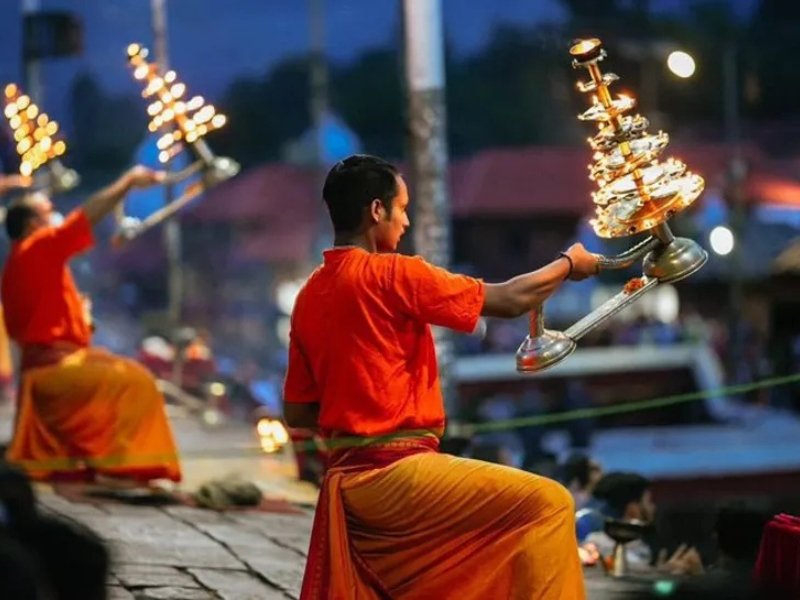
Must-Visit Shrines
Temples & Sacred Places
Yamunotri Temple
Enshrining a black marble idol of Goddess Yamuna, the Yamunotri Temple is the starting point of the Char Dham circuit. The temple was originally built by Maharaja Pratap Shah of Tehri Garhwal and later rebuilt by Maharani Guleria of Jaipur after earthquake damage. Adjacent to the temple is the famous Surya Kund — a natural boiling hot spring where pilgrims cook prasad. Pilgrims must also offer worship at the Divya Shila (a sacred rock pillar) before entering the sanctum. The trek from Janki Chatti covers 6 km of scenic Himalayan trail.
Gangotri Temple
Built by the Gurkha commander Amar Singh Thapa in the 18th century, the Gangotri Temple sits on the banks of the crystal-clear Bhagirathi River. A sacred shila (rock) in the river bed is believed to be the precise spot where King Bhagirath performed penance to bring Ganga to earth. The temple is road-accessible, making it one of the more comfortable dhams. From Gangotri, a 18 km trek leads to the Gaumukh Glacier — the true source of the Ganga — an experience of extraordinary natural grandeur.
Kedarnath Temple
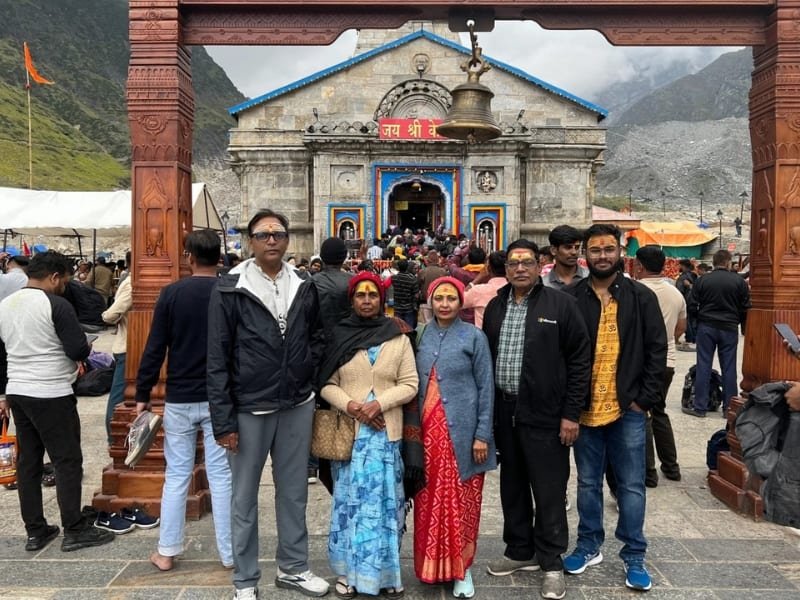
One of the oldest temples in India, the Kedarnath Temple is a masterpiece of ancient stone architecture believed to have been built by the Pandavas and later revived by Adi Shankaracharya. The temple houses a conical rock formation representing Lord Shiva in his bull form — a uniquely powerful manifestation. The 16 km trek from Gaurikund is challenging but spiritually intense. In 2013, the Kedarnath floods devastated the region, yet the temple stood unharmed — widely regarded as a divine miracle. Helicopter services from Phata, Sirsi, and Guptkashi make it accessible to all.
Badrinath Temple (Badrinarayan)
The holiest Vishnu temple in North India, Badrinath stands against the majestic backdrop of the Neelkanth peak (6,596m). The black stone idol of Lord Badrinarayan is believed to be a self-manifested (swayambhu) deity. Adjacent attractions include Tapt Kund (hot sulphur spring for ritual bathing), Brahma Kapal (sacred platform for ancestral rites), and Mana Village — the last Indian village near the Tibetan border where the mythological Vyas Gufa and Bheem Pul are located. Badrinath has the longest open season of all four dhams.
Experiences & Activities
Things to Do in Char Dham
Ritual Bathing in Sacred Springs
Take a dip in Surya Kund (Yamunotri), Gauri Kund (Yamunotri), and Tapt Kund (Badrinath) before darshan. These natural hot sulphur springs are believed to purify body and soul.
Cook Prasad in Surya Kund
At Yamunotri, tie rice or potatoes in a cloth and lower them into the boiling Surya Kund. Within minutes, the naturally cooked prasad is ready to offer — a ritual unique to this dham.
Trek to Gaumukh Glacier
From Gangotri, embark on an 18 km trek to Gaumukh — the snout of the Gangotri Glacier and true source of Ganga. One of India's most magnificent and sacred treks.
Pitra Tarpan at Brahma Kapal
Perform ancestral water rites at Brahma Kapal on the Alaknanda riverbank at Badrinath. Believed to grant liberation to ancestors across multiple generations simultaneously.
Explore Mana — Last Indian Village
3 km from Badrinath temple, Mana is the last inhabited village before the Tibet border. Visit Vyas Gufa (cave of sage Vyasa), Bheem Pul (natural rock bridge), and Saraswati River origin.
Photography at Panch Prayag
Each of the five confluences offers dramatic visual poetry — two rivers of distinct colour merging in a burst of white foam against ancient stone. Perfect for sunrise and golden hour photography.
Sunrise View from Kedarnath
Stay overnight at Kedarnath (if accommodation is available) to witness the sunrise over the Himalayan peaks from 3,583m. The early morning temple darshan in dawn light is unforgettable.
Visit Triyuginarayan Temple
Near Kedarnath, Triyuginarayan Temple marks the legendary spot where Lord Shiva married Goddess Parvati. The sacred fire (akhanda dhuni) here has reportedly burned continuously since the wedding.
Must-Try Cuisine
Local Food in Char Dham
Pahadi Dal Chawal
Mountain lentil soup served with steamed rice — a staple at every dhaba along the Char Dham route. Simple, warm, and deeply comforting after a long trek.
Mandua Roti
Roti made from finger millet (mandua), a traditional Garhwali grain. Higher in nutrients than wheat flour, especially beneficial at high altitudes where digestion can slow.
Gahat Dal Soup
A thick, protein-rich horse gram soup native to Uttarakhand. Widely consumed in the colder months and at higher altitudes. Known for its warming and medicinal properties.
Singori & Bal Mithai
Kumaoni sweets available at market stops along the route. Singori is wrapped in leaves; Bal Mithai is a dark chocolate-like fudge — perfect post-darshan energy boosts.
Travel Information
How to Reach
By Air
Jolly Grant Airport, Dehradun
By Train
Haridwar / Rishikesh / Dehradun Railway Station
By Road
Haridwar → Char Dham Circuit
Essential Guide
Travel Tips & Advice
Register before you travel.
Online registration at registrationandtouristcare.uk.gov.in is mandatory and free. Carry your QR-based Yatra Pass and original ID at all checkpoints.
Acclimatize before ascending
Spend at least 1–2 nights in Haridwar or Rishikesh before beginning the yatra. Rushing altitude gain is the primary cause of health emergencies.
Pack for all weather
Carry a thermal base layer, fleece jacket, windproof outer layer, and a compact rain jacket. Even in May, nights can drop below 5°C.
Always start trek early
Begin by 5–6 AM to avoid afternoon clouds, rain, and traffic on the narrow mountain roads. Late starts significantly increase risk.
Stay hydrated.
Drink 3–4 litres of water daily. High altitude dehydration is common. Avoid alcohol and caffeine in excess — they worsen altitude sickness.
Consult a doctor first
Those with heart conditions, asthma, or diabetes must carry a medical fitness certificate in 2026. All pilgrims above 55 undergo mandatory health screening at base camps.
Book accommodation in advance
During May–June peak season, hotels at Barkot, Uttarkashi, Guptkashi, and Badrinath fill weeks ahead. GMVN properties are reliable and bookable online.
No vehicles between 10 PM – 4 AM
Night driving is banned on all Char Dham mountain roads. Plan your drives to reach each base town before sunset.
Keep buffer days
Landslides, weather closures, and crowd surges can delay movement by 1–2 days. Build buffer into your itinerary, especially around Kedarnath.
Eat light and sattvic
Heavy, oily, or non-vegetarian food at altitude slows digestion. Stick to khichdi, dal-rice, aloo paratha, and hot soups. Your body will thank you.
Carry cash
ATMs are unreliable beyond Uttarkashi and Rudraprayag. Carry sufficient cash for dhabas, porters, pony/palki charges, and emergency expenses.
Dress modestly at all temples
Cover shoulders and legs. Remove footwear at temple entrances. Many temples prohibit leather items inside the sanctum.
Explore the Region
Nearby Places
Mana Village
3 KM FROM BADRINATHThe last inhabited Indian village before the Tibet border. Walk the Mahabharata trail — visit Bheem Pul (natural rock bridge over Saraswati), Vyas Gufa (sage Veda Vyasa's cave), and shop for yak wool products.
Gaumukh Glacier
18 KM TREK FROM GANGOTRIThe snout of the Gangotri Glacier and the true origin of the Ganga. One of India's most significant treks, passing through Bhojbasa meadows with dramatic Himalayan views. Permits required.
Triyuginarayan
12 KM FROM KEDARNATH BASEThe mythological wedding venue of Lord Shiva and Goddess Parvati. An eternally burning sacred fire (akhanda dhuni) in the temple courtyard is said to have burned since the cosmic wedding.
Saptarishi Kund
12 KM TREK FROM YAMUNOTRIA remote glacial lake at 4,421m where the seven great sages (Saptarishis) performed tapasya. Natural blue sapphires are found on its shores. Almost entirely untouched — a hidden gem of Yamunotri.
Valley of Flowers
NEAR BADRINATH, CHAMOLI DISTRICTA UNESCO World Heritage Site and national park bursting with rare Himalayan flora in July–August. A detour from the Badrinath route that rewards nature lovers with extraordinary botanical diversity at altitude.
Auli
16 KM FROM JOSHIMATHIndia's premier ski destination and a stunning meadow with panoramic views of Nanda Devi, Mana Peak, and Kamet. The Auli ropeway is one of the longest in Asia. Ideal for a post-yatra nature retreat.
FAQ
Frequently Asked Questions
Ready to visit Char Dham?
Let us plan your perfect pilgrimage