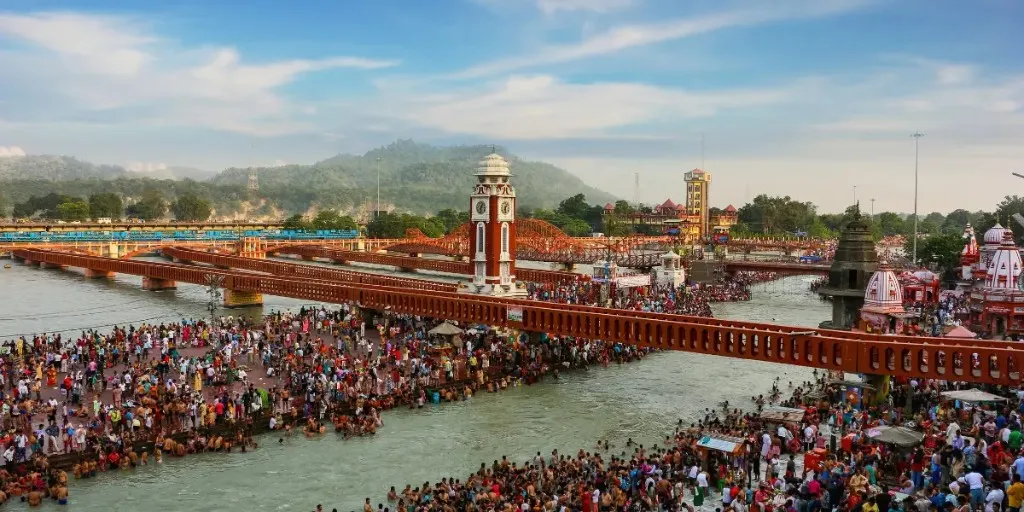
The Amrit Snan is the morning the Akharas go into the river first. Here is what happens, in what order, where to watch from and how families can bathe safely afterwards.
Ask anyone who has been to a Kumbh what they remember, and the answer is usually the same morning: the Amrit Snan. It is the day the Akharas walk to the river in procession and bathe before anyone else. For a few hours the ghats belong to them, and lakhs of people line the route just to watch.
This guide explains what actually happens on that morning, who the Akharas are, and how to plan your own dip around it, whether you are going to Haridwar, Nashik or Ujjain.
Shahi Snan or Amrit Snan: Is It the Same Thing?
Yes. For generations it was called the Shahi Snan, the "royal bath", because the Akharas arrive like a royal procession, with chariots, horses, flags and drums. Beginning with the Prayagraj Maha Kumbh in 2025, the official name used by the mela administration is Amrit Snan, a reference to the drops of amrit that are said to have fallen at the four Kumbh cities. The ritual itself has not changed. You will see both names on notices, in newspapers and on booking sites, and they mean the same bath.
Who Are the Akharas?
An Akhara is a monastic order of sadhus. Thirteen Akharas are recognised by the Akhil Bharatiya Akhara Parishad, the body that coordinates them at every Kumbh. They fall into three broad traditions:
| Tradition | Akharas |
|---|---|
| Shaiva (devotees of Shiva) | Juna, Niranjani, Mahanirvani, Atal, Avahan, Anand, Agni |
| Vaishnava or Bairagi (devotees of Vishnu) | Nirvani Ani, Digambar Ani, Nirmohi Ani |
| Udasin and Nirmal | Bada Udasin, Naya Udasin, Nirmal |
The Naga sadhus, ash-smeared and usually unclothed, belong to the Shaiva Akharas and often lead their Akhara's procession. Behind them come the Mahamandaleshwars, the senior teachers of each order, frequently seated on decorated chariots, followed by disciples and devotees.
What Happens on an Amrit Snan Morning
The day starts long before sunrise. Each Akhara sets out from its camp in the mela area at a time fixed in advance, and the processions move towards the main ghat one after another along a route the police keep clear. The sequence is agreed between the Akhara Parishad and the mela administration, and it is followed strictly, because the order of bathing is a matter of tradition and honour.
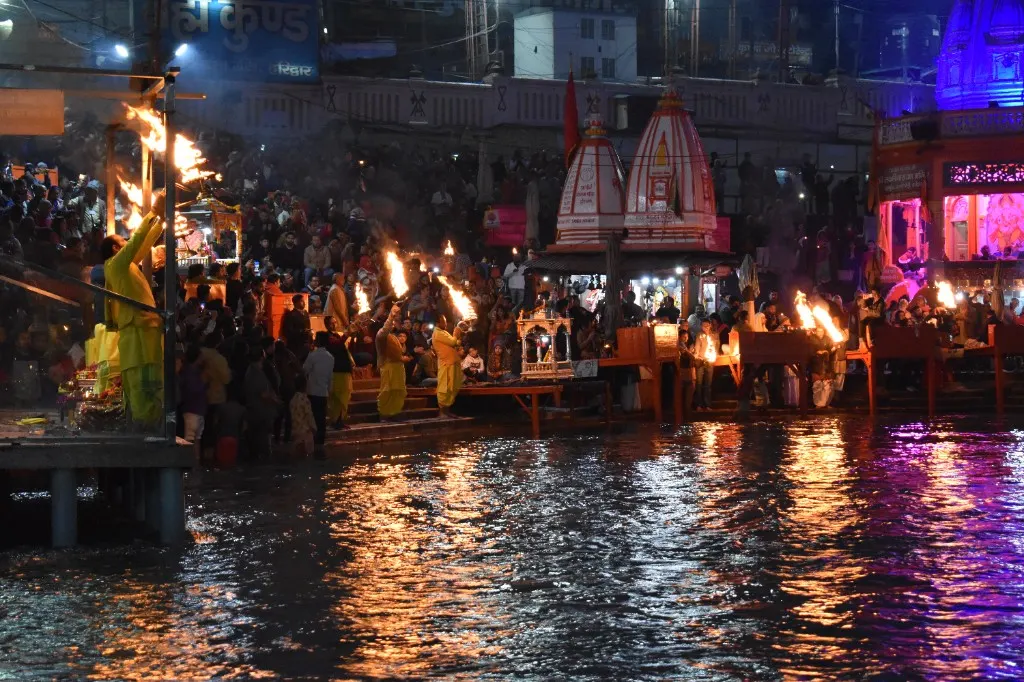
At the river, each Akhara bathes as a group, often with chanting, conch shells and a great deal of joy, and then walks back. Only when the last Akhara has finished is the main ghat opened to the public. On a busy Amrit Snan this can be late morning or even afternoon.
Where the Akharas Bathe in Each Kumbh City
- Haridwar: Brahma Kund at Har Ki Pauri on the Ganga. The three Amrit Snans of the 2027 mela fall on 6 March, 8 March and 14 April. See all the snan dates and camps for the Kumbh Mela in Haridwar.
- Nashik and Trimbakeshwar: the Kumbh is split between two towns. The Vaishnava Akharas bathe at Ramkund in Nashik, and the Shaiva Akharas, Naga sadhus included, bathe at Kushavarta Kund in Trimbakeshwar. The 2027 Amrit Snans fall on 2 August, 31 August and 11 to 12 September. See the Nashik guide.
- Ujjain: Ram Ghat on the Shipra, a short walk from Mahakaleshwar. The 2028 Shahi Snans are reported for 9 April, 23 April and 8 May. See the Ujjain guide.
Dates follow each mela administration's announcements and can move by a day with the tithi, so check the official notice a week before you travel.
How to Watch the Procession
- Arrive the evening before. Vehicles are stopped at the city limits from the night before an Amrit Snan, and the last few kilometres are on foot.
- Pick your spot early. Barricades go up along the procession route. A place on the route, a side ghat or a rooftop booked through your hotel gives a far better view than the main ghat, which you will not be able to enter while the Akharas bathe.
- Stay behind the barricades. The route is kept clear for a reason. Processions move fast in places, and horses and chariots need room.
- Be patient. Thirteen processions take hours. Bring water, a snack and something to sit on.
Etiquette Around the Sadhus
The Amrit Snan is a religious event for the Akharas, not a show. A few habits go a long way:
- Ask before photographing a sadhu up close, and accept a no. Many are happy to be photographed; some are not.
- Do not try to touch, follow or block a procession for a selfie.
- If you wish to offer dakshina or seek blessings, do it at the Akhara camps on a calmer day, not on the procession route.
- Dress modestly and keep your voice down near the camps, especially in the early morning.
Taking Your Own Dip on an Amrit Snan Day
You can bathe on an Amrit Snan day, just not at the main ghat while the Akharas are there. The administration opens many other ghats along the river at the same time, and most families bathe at one of those early in the morning, then watch the processions afterwards. Hold the chains at the ghat, keep children within arm's reach and follow the water police.
If you are travelling with elderly parents or small children, an ordinary snan day is honestly the better choice. The water is the same and the crowd is a fraction of the size. Our guide to the Kumbh with elderly parents and children goes through this in detail.
Where to Stay for an Amrit Snan
On these three mornings the only stay that really works is one you can walk to a ghat from, because cars will not get close. Rooms near the main ghats are booked months ahead for every Amrit Snan. Compare all three melas on our Kumbh Mela 2027–2028 page, or send us your date and we will suggest rooms, homestays or camps within walking distance.
FAQs
What is the difference between Shahi Snan and Amrit Snan?+
None in practice. Shahi Snan is the traditional name; Amrit Snan is the official name used by mela administrations since the 2025 Prayagraj Maha Kumbh. Both describe the bath in which the Akharas enter the river first.
Can ordinary pilgrims bathe on an Amrit Snan day?+
Yes. The main ghat is reserved for the Akharas until the last one has bathed, but other ghats along the river stay open to the public, and the main ghat opens once the processions are over.
How many Akharas take part in the Amrit Snan?+
Thirteen Akharas recognised by the Akhil Bharatiya Akhara Parishad: seven Shaiva, three Vaishnava and three Udasin and Nirmal orders.
Is it safe to take elderly parents to an Amrit Snan?+
It is possible, but the walking and crowds are hard on seniors. An ordinary snan day near a quieter ghat is usually the better choice for older family members.
Share this article