By the Teerthayan planning team · Updated
Ujjain Simhastha 2028 Dates: What's Announced So Far
Searching for Ujjain Kumbh 2027? Ujjain's next Kumbh is the Simhastha of 2028, not 2027. If you want a Kumbh in 2027, it is the Kumbh Mela in Haridwar or Nashik–Trimbakeshwar.
Ujjain gets its Kumbh once in twelve years, when Guru is in Simha rashi and the sun is in Mesha. Simhastha literally refers to that, and the 2028 mela is a full Kumbh for the city, not an Ardh one. The previous ones were in 2004 and 2016.
The Madhya Pradesh government's plan puts the mela from 27 March to 27 May 2028, with three Shahi Snans and seven parv snans between 9 April and 8 May. Exact dates for each snan haven't been formally notified yet. This is how they fall on the calendar:
| Date | Event |
|---|---|
| 27 March 2028 | Mela period begins |
| 9 April 2028 | First Shahi Snan (Chaitra Purnima) |
| Around 23 April 2028 (expected) | Second Shahi Snan (Vaishakh Amavasya) |
| 8 May 2028 | Third Shahi Snan (Vaishakh Purnima) |
| 27 May 2028 | Mela period ends |
The first and last fall on the full moons that bound the official snan window. The middle one is our reading of the calendar, not a notified date, and some websites list quite different dates. The full official list should be out a few months before the mela, and even these could shift. Please look at the official notice before you spend money on tickets or rooms.
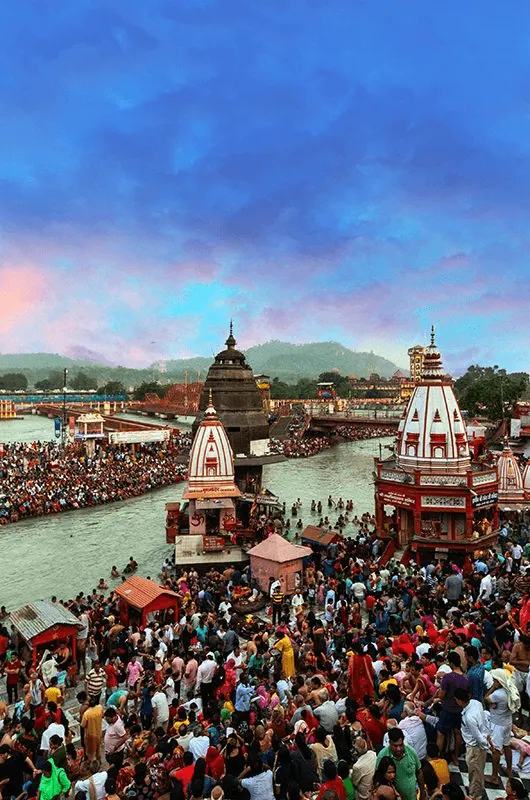
The state has been getting ready for a while now. Mahakal Lok is finished, the ghats on the Shipra River are wider than they were, and there's a lot more parking on the outskirts than in 2016. Newspapers talk about crores of visitors. Nobody can say for sure, but expect every Shahi Snan Ujjain morning to be packed.
Before Your First Simhastha Kumbh Mela
People going for the first time are often surprised that a Simhastha Kumbh Mela lasts two months and that most of those days are actually quite manageable. It's really the three Shahi Snan mornings that get crushing. Any other day you can take your dip in the Shipra River, stand in the darshan line at Mahakaleshwar Temple and walk around the Akhara camps without much pushing. Quite a few families come once on a weekday to get a feel for it and return for a Shahi Snan later, since the mela runs long enough for that. Also, don't bother packing snacks. With langars, bhandaras and poha-jalebi stalls everywhere, nobody goes hungry at a Simhastha Kumbh Mela.
Bathing Days to Mark: Shahi Snan Dates
These are the Shahi Snan dates as they stand. Some notices call them Amrit Snan, which is just the newer name.
- 9 April 2028, first Shahi Snan. Chaitra Purnima. The Akharas walk to the Shipra River in procession for the first time, and from here the city really fills.
- Around 23 April 2028, second Shahi Snan (expected). Vaishakh Amavasya, in Vaishakh's Krishna paksha. It's properly hot by then, so most people finish their dip before seven.
- 8 May 2028, third Shahi Snan. Vaishakh Purnima. Last of the three and usually the most crowded.
The 13 Akharas bathe first on each of these days, in a sequence fixed by the Akhara Parishad, and the Naga sadhus are normally at the head. The public goes in after them. Ram Ghat is where most of the action is, though bathing points are opened along a long stretch of the Shipra to spread people out.
With elderly parents we'd honestly steer you away from the Shahi Snan days and towards an ordinary parv snan. It's the same water and a fraction of the crowd.
Why Devotees Call It the Maha Kumbh
The Puranas say that when the ocean was churned for amrit, a few drops fell at Prayagraj, Haridwar, Nashik and Ujjain, and the Kumbh has rotated between those four ever since. A dip at Kumbh time is believed to clear your sins and bring you closer to moksha. Because Ujjain's mela is the full twelve-year one, lots of people just call it the Maha Kumbh.
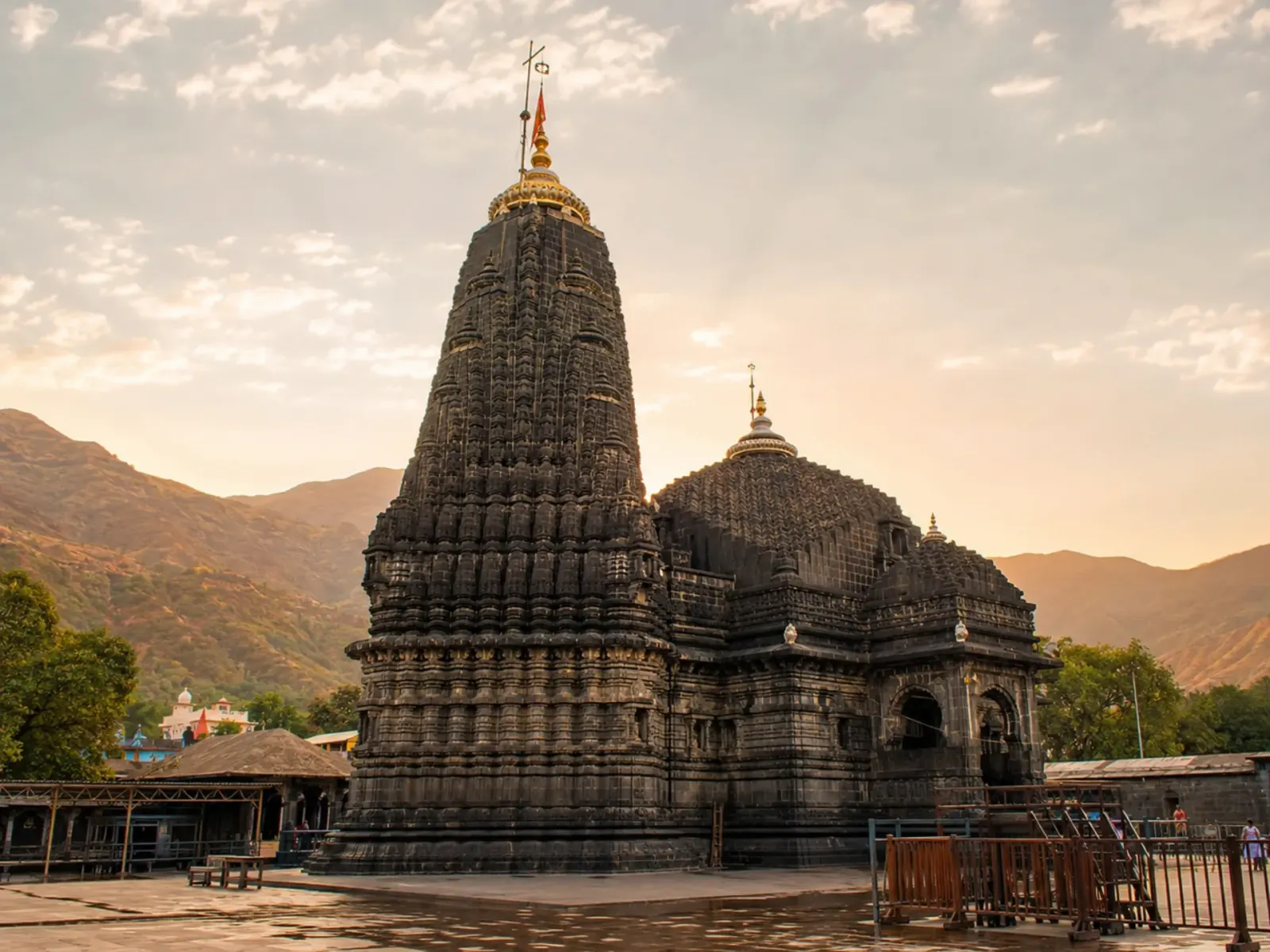
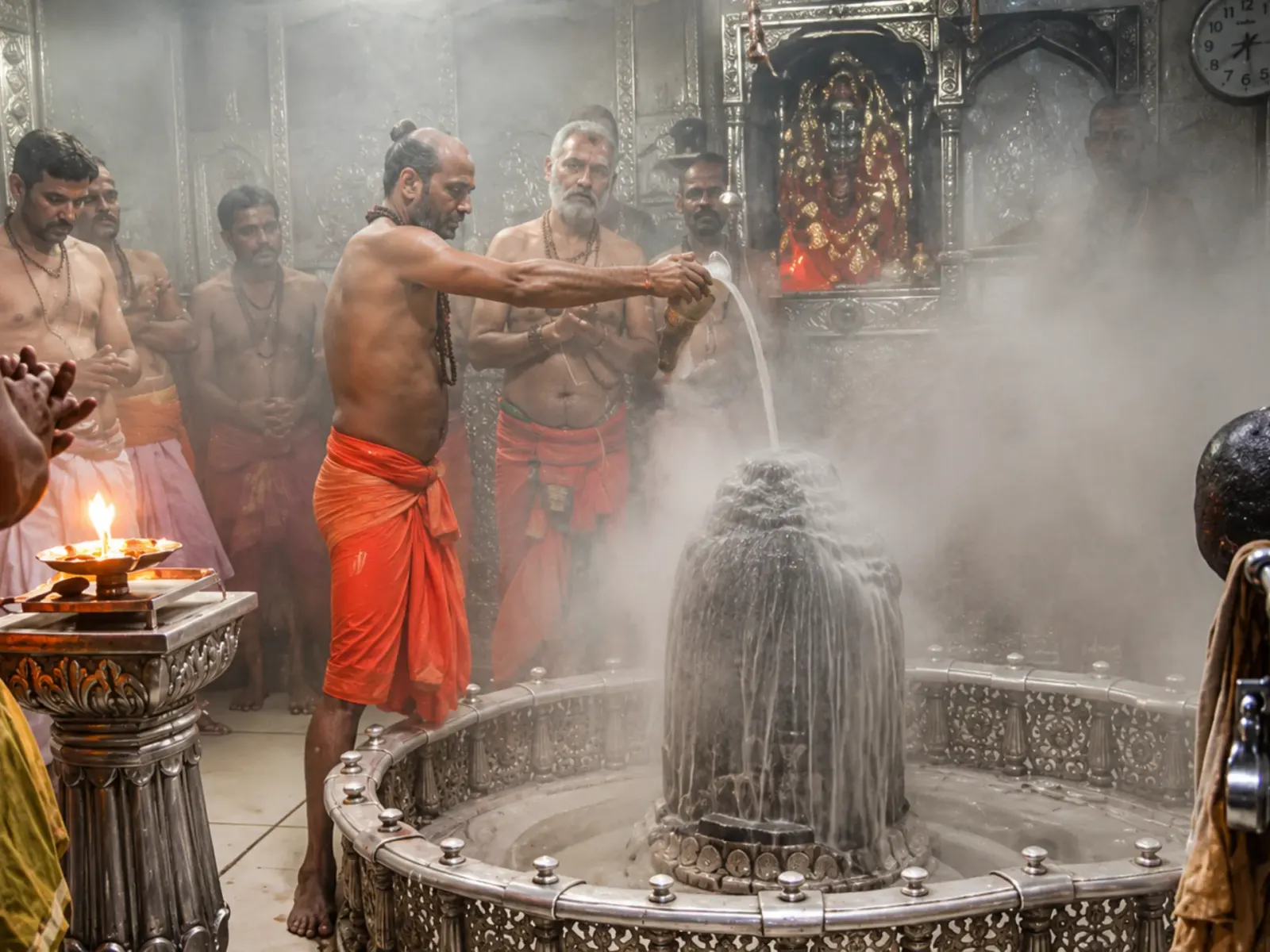
What makes Ujjain different is Mahakal. Mahakaleshwar Temple is one of the twelve Jyotirlingas, the only one facing south, and devotees see Mahakal as the lord of time and of death. When we ask families why they're making this Ujjain pilgrimage, most say the same two things, a bath in the Shipra and Mahakal darshan, ideally on the same morning. Around here people say "Jai Mahakal" for hello, thank you and goodbye.
Ujjain is also very old. Under the name Avantika it was one of the seven sacred cities, famous for astronomy and scholarship. Krishna is said to have studied at Sandipani Ashram, and Kalidasa wrote about the city again and again. Walk behind Ram Ghat at dawn, past the old havelis on the Shipra, and you'll understand.
While the Simhastha is on, Akhara camps, kirtans, pravachans and langars take over entire neighbourhoods, and even the not-very-religious usually come home glad they saw it.
Inside the Mela: Where the Ujjain Kumbh Happens
All of it is in Ujjain, along the Shipra, with Mahakaleshwar Temple at the centre.
The Old City and Mela Sectors
Ujjain is a mid-sized city, about 55 km from Indore. The mela covers the old city, the riverside ghats and big camp sectors laid out on open land outside town. Hotels are mostly near the railway station, in Freeganj, and around Mahakaleshwar Temple.
Mahakaleshwar Temple and the Mahakal Lok Corridor
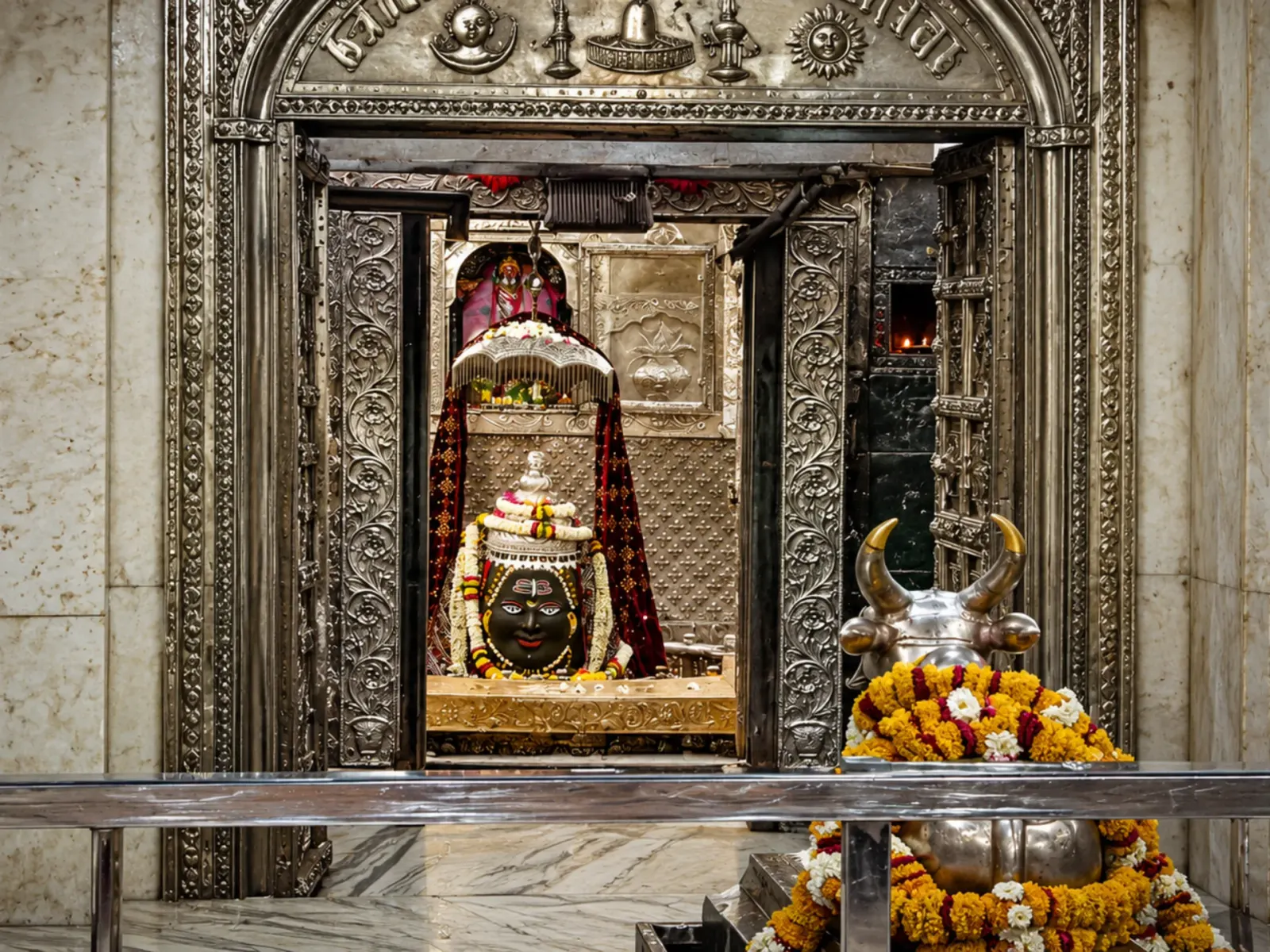
From Ram Ghat to Mahakaleshwar is a short walk. Mahakal Lok has made the approach much more open, but darshan queues during the mela will still be long. You have to book the pre-dawn Bhasma Aarti in advance, and while the mela is on those slots are very hard to get.
Ram Ghat and the Shipra River
Ram Ghat is the oldest ghat on the Shipra and the most important. Most Akhara processions finish here on Shahi Snan mornings. Come on a normal evening and it's calm, the aarti on the Shipra takes about an hour and is lovely. Narsingh Ghat, Datta Akhara Ghat and Triveni Ghat are also opened for bathing during the mela.
Arriving: How to Reach Ujjain for the Kumbh
There are three main ways: fly to Indore, take a train to Ujjain itself, or drive.
Via Indore Airport
The closest airport is Devi Ahilyabai Holkar in Indore, roughly 55 km away, with direct flights from Delhi, Mumbai, Bengaluru, Hyderabad, Ahmedabad and more. A taxi from there to Mahakaleshwar takes about an hour and a half normally. The evening before a Shahi Snan, budget three.
By Rail to Ujjain Junction
Ujjain Junction is on the main lines, and trains come in from Delhi, Mumbai, Bhopal, Ahmedabad, Jaipur and plenty of other cities. Railways usually add mela specials, and temporary stations come up on the edges of the city to spread passengers out. Book on the day the reservation window opens.
Driving From Indore, Bhopal or Omkareshwar
Indore is 55 km away, Bhopal about 190 km and Omkareshwar around 140 km. State and private buses run all day. Many families do a small loop through Ujjain, Omkareshwar and Maheshwar. We can plan that route for you.
Coming for a Shahi Snan? Get there the day before. People skip this more than any other advice, and they always regret it.
Local Transport on Snan Days
On big days private vehicles are stopped at parking lots outside the city. You'll take a shuttle or an e-rickshaw from there and walk the last stretch. Near Mahakaleshwar and Ram Ghat the walking routes usually run one-way. Ordinary days are easy, there are autos and e-rickshaws everywhere and they're cheap, and from the temple to the ghat is only a few minutes through the lanes. On a Shahi Snan morning, though, the police tend to close those lanes to traffic the night before.
So leave the car outside the old city on snan days. Better still, stay somewhere you can walk from.
Picking Your Area: Where to Stay in Ujjain During the Kumbh
Rooms near the temple and the ghats are gone months before the Shahi Snans. Use this as a rough guide to which area suits your group:
| Area | Good for | Distance to Ram Ghat |
|---|---|---|
| Mahakal / Ram Ghat area | Darshan and snan on foot | 0–1 km |
| Freeganj / near railway station | Train arrivals, mid-range hotels | 3–4 km |
| Dewas Road / Indore Road | Bigger hotels, easier parking | 5–10 km |
| Mela tent cities | Akhara camps, satsang | Depends on sector |
| Indore | Premium hotels, airport | 55 km |
For one Shahi Snan and Mahakal darshan, the lanes between Ram Ghat and Mahakaleshwar are the most practical base. Hotels near Ram Ghat are mostly small and basic, but at 4 am you're five minutes from the water. If comfort matters more, Dewas Road, Indore Road or Indore itself work, and you drive in.
Try to confirm your room three or four months ahead. We also book for bhajan mandals, temple trusts and those big families whose numbers keep going up and down.
There are a couple of things about mela rooms that catch people out. Rooms close to the Shipra tend to be small, often without a lift or parking, so they suit people who don't mind stairs. Hotels near Ram Ghat and Mahakaleshwar often insist on a two or three-night minimum around snan dates, while places further out are more relaxed about it. Tell us who's coming and we'll suggest an area.
Hotels in Ujjain for the Simhastha
Most calls we get about hotels come down to the walk to Mahakaleshwar, whether the parents will be comfortable, or price. There's a big spread, from plain lodges near the station to newer business hotels on the main roads and a couple of resort-type places out of town, and the ones near the temple go first. Ask for AC, which you'll be thankful for in May. If you want to be close to the temple, ask early, there simply aren't many rooms.
Hotels Near Mahakaleshwar Temple and Ram Ghat
Since everyone wants an early darshan and a short walk to the Shipra, these rooms sell out before anything else. Most are small, family-run, tucked into the lanes around the temple and Mahakal Lok. If this is your top priority, book here first. Ram Ghat is the next best area and usually a little cheaper.
Cheaper Rooms and Samaj Bhawans
On a budget, look at lodges near the station, dorm beds, and rooms in samaj bhawans and trust buildings. Plain and clean enough, near a shuttle stop into the mela grounds. If you're very early, a few cheaper rooms near Ram Ghat fall into this range as well.
Comfort Stays in Ujjain and Indore
For more comfort there are bigger hotels on Indore Road and Dewas Road, a handful of resorts, and Indore's premium hotels. They suit older guests, families with small children and NRI visitors who want a car and driver all week. A few nicer hotels near the temple have also opened since Mahakal Lok was built.
Family Homes: Homestays
Staying with a family is one of the nicest ways to see the city. A homestay is usually in the old city, in Freeganj, or in a colony near the Shipra. Breakfast is poha-jalebi, lunch could be dal-bafla, and someone at home always knows which gali the police are closing tomorrow. It's cheaper than most hotels too. Each house only has two or three guest rooms, so they fill early.
Tents and Mela Camps
The government and private operators put up large tent cities on open land outside town for the mela. These camps usually have proper beds, plug points, shared or attached bathrooms and simple veg food. It's summer, so ask about coolers or AC, shaded paths and drinking water before you book.
For the tent experience without roughing it, see our partner's luxury camp in the next section. We can add transfers to Ram Ghat to a camp booking.
Ashrams by the River
Older pilgrims often prefer ashrams and dharamshalas near the Shipra or around Mahakaleshwar. They're cheap, simple and close to the water, but many lock their gates at night and have a daily routine, so ask first. The ones by Ram Ghat fill up quickest. You can book directly or through Teerthayan.
Luxury Camp at the Ujjain Simhastha
We book Simhastha camps with our partner Pulp Hotels. Their Simhastha Kumbh Luxury Camp is in the Mela area on the Kshipra near Ram Ghat, with Mahakaleshwar, Harsiddhi and Kal Bhairav close by. Days start with morning yoga and end with satsang in the evening, and the meals are sattvic.
| Tent | Beds | Guests | Rate from (per night) |
|---|---|---|---|
| Deluxe | Twin or double | Up to 3 | ₹13,500 |
| Luxury | Four-poster king | Up to 3 | ₹15,500 |
| Royal | Four-poster king, the largest tent | Up to 5 | ₹19,500 |
Every tent has an attached bathroom and a cooler, which matters when April and May go past 40°C. Rates are plus 18% GST and rise around the Shahi Snan days. Check-in is at 2 pm and check-out at noon. The Kumbh desk confirms the rate for your dates before you pay, and you pay at the camp, not online. See the Ujjain camp, photos and tents on our partner's site.
Places in Ujjain Worth a Detour
If you've got a spare day, these are all a short auto ride apart. This is roughly the order our guests go in.
Mahakal Darshan and the Bhasma Aarti
For most people this is the reason they came. Go early, and if you manage to get a Bhasma Aarti booking, take it. Carry as little as possible because phones and bags often aren't allowed inside, and check the dress code for the garbhagriha. From there it's a short walk down to the Shipra and Ram Ghat. If you can't make the mela dates, our Mahakaal Darshanam yatra brings you to Mahakal at a quieter time of year.
Evenings at Ram Ghat
Even if you bathe somewhere else, keep an evening for the aarti at Ram Ghat. Diyas floating on the Shipra, bells ringing on both banks, families sitting on the steps. It's the quiet flip side of a Shahi Snan morning.
Kal Bhairav, the City's Guardian
The Kal Bhairav temple is about 5 km from the centre. Kal Bhairav is Ujjain's kotwal, its protector, and he's offered liquor, which surprises most first-timers. The queue is long all through the mela and worst on a Shahi Snan morning, but people go anyway.
Harsiddhi Mata and the Deepstambhs
Harsiddhi is a Shakti Peetha a few minutes from Mahakaleshwar and among the oldest sights. Its two tall lamp towers get lit on festival evenings, and if you catch that, it's a highlight of the trip.
With more time, add Sandipani Ashram, Mangalnath, Chintaman Ganesh, Gadkalika, the Bhartrihari caves and the old Vedh Shala observatory. If you have a car, Omkareshwar is a good day out. Combining Mahakal with Kashi? See our Kashi Mahakaal yatra from Delhi.
Practical Tips for a Summer Kumbh
Things we've watched go wrong for pilgrims, and how to avoid them.
What to Pack for April and May
Loose cotton clothes and something on your head, a cap or a gamchha. Sunglasses, sunscreen, a refillable bottle. ORS and glucose aren't optional in this heat. Then one dry change for after the dip, a thin towel, slippers that grip on wet stone, your usual medicines and a photocopy of your ID. A small waterproof pouch for the phone comes in handy.
Heat and Ghat Safety
In April and May the sun is more dangerous than the crowd. Keep sipping water, stay indoors from noon till about four, and watch older relatives for dizziness or confusion, which are early signs of heatstroke. In the Shipra, use only the ghats the administration has opened, hold the chain and listen to the water police. Keep children within arm's reach, especially at Ram Ghat on a Shahi Snan morning. And before you walk into a crowd, agree on a spot to regroup, like a temple gate or a big hoarding.
Food, Water and Prasad
Drink sealed or filtered water and eat food you've seen cooked. Langar and bhandara meals are usually fine because they're served straight off the fire. Skip cut fruit and roadside sugarcane juice while it's this hot. That might sound fussy, but it keeps people out of the clinic. Take Shipra water home in a sealed bottle rather than an open lota, and most families pick up Mahakal prasad from the temple counters on their last morning.
Dealing With Shahi Snan Crowds
Reach town the day before any Shahi Snan date. If this is your first big mela, that matters more than anything else on this page. Go down to Ram Ghat very early while it's cool, or wait till evening. Follow the marked one-way routes even when they seem roundabout. And with older parents, pick a regular parv snan day, it's just easier for everyone.
Why Booking Early Matters
Rooms near Mahakaleshwar and Ram Ghat go first for the April and May snans, and prices climb every week. Book once your date is fixed and you'll also get better cancellation terms.
We'll update this page as the administration releases more on routes, passes and parv snan dates.
Yatras to Pair With Your Kumbh Trip
Read Next: Kumbh Mela Articles
- Kumbh Camp vs Hotel in Haridwar 2027: Which Stay Suits Your Family?Tent, hotel, ashram or homestay? How the Kumbh stays in Haridwar compare on distance to the ghat, cost and comfort, and which one suits your family.Read the article →
- Haridwar Kumbh Mela 2027 Trip Plan: How to Reach, Where to Stay, 3-Day ItineraryA practical plan for Haridwar Kumbh Mela 2027: choosing the snan day, getting there from Delhi, where to stay and a 3-day itinerary with Rishikesh.Read the article →
- Amrit Snan (Shahi Snan) Explained: Akharas, Order and Etiquette at the KumbhThe Amrit Snan is the morning the Akharas go into the river first. Here is what happens, in what order, where to watch from and how families can bathe safely afterwards.Read the article →
- Kumbh Mela With Elderly Parents and Children: A Practical Safety GuideMany families bring Dadi, Nanaji and the grandchildren to the Kumbh. With the right snan day, a room close to the water and a few habits, the trip is very manageable. Here is how.Read the article →
- Rituals at the Kumbh Mela: Snan Sankalp, Pind Daan, Rudrabhishek and MoreFor many families the puja matters as much as the dip. Here are the rituals most often performed at the Kumbh, what each involves and where it is done in Haridwar, Nashik and Ujjain.Read the article →
- How to Reach Nashik Kumbh Mela 2027: Air, Rail and RoadPlanning Kumbh Mela 2027? Discover how to reach Nashik by air, train and road, plus Nashik to Trimbakeshwar routes, travel tips and planning advice.Read the article →
Frequently Asked Questions
No. Ujjain's next Kumbh, the Simhastha, is in 2028: the state's plan says 27 March to 27 May 2028. The Kumbh Melas in 2027 are at Haridwar and at Nashik–Trimbakeshwar.
Plan Your Ujjain Pilgrimage With Teerthayan
A lot of families wait years for a trip like the Ujjain Simhastha. Fix your snan date, choose a hotel, homestay, ashram or tent, and let Teerthayan sort out the bookings.