By the Teerthayan planning team · Updated
Nashik Kumbh Mela 2027 Dates: The Simhastha Calendar
Every twelve years, when Guru enters Simha rashi, the Simhastha comes back to Nashik: 2003, 2015, and now 2027. The main schedule was fixed on 1 June 2025 at a meeting of the Akharas chaired by Chief Minister Devendra Fadnavis (reported by The Week), which makes planning a lot easier.
The dates that matter most:
| Date | Event | Where |
|---|---|---|
| 31 October 2026 | Dhwajarohan (flag hoisting), official start | Trimbakeshwar, Ram Kund, Panchavati |
| 29 July 2027 | Nagar Pradakshina | Nashik |
| 2 August 2027 | First Amrit Snan (Ashadh Amavasya) | Ram Kund and Trimbakeshwar |
| 31 August 2027 | Second Amrit Snan (Shravan Amavasya) | Ram Kund and Trimbakeshwar |
| 11 September 2027 | Third Amrit Snan | Ramkund, Nashik |
| 12 September 2027 | Third Amrit Snan | Kushavarta, Trimbakeshwar |
| 24 July 2028 | Flag lowered, official close | Nashik and Trimbakeshwar |
On paper the Simhastha runs close to two years, October 2026 to July 2028. In practice the town starts filling up in late July and stays full till mid-September. Between the three big baths there are plenty of smaller parvani snans, and if you're bringing parents or young kids those are the days we'd point you to. The dip on those days is far more relaxed.
A small caution: dates based on tithis can move by a day, and Shahi Snan timings sometimes change late. Check the official notice roughly a week before you travel.
What Crowd Control Means for You
Crores of pilgrims are expected across Nashik and Trimbak. On an Amrit Snan day, crowd control will mostly feel like this from the ground: your car stops well outside town, you walk a fixed one-way route, and you wait in a holding area until your group is let down to the water. It takes time and there's no shortcut, which is why we keep pushing people towards rooms within walking distance.
The Three Royal Baths: Shahi (Amrit) Snan Dates
The government notices now say "Amrit Snan". Most people still say Shahi Snan. It's the same bath.
- 2 August 2027, first Amrit Snan. Ashadh Amavasya. The Akharas go into the water for the first time this Kumbh. It's emotional, and Ram Kund Nashik is very crowded.
- 31 August 2027, second Amrit Snan. Shravan Amavasya. Shravan already brings big Monday crowds to Trimbakeshwar temple, so Trimbak gets especially packed around this date.
- 11 and 12 September 2027, third Amrit Snan. Nashik bathes at Ramkund on the 11th, Trimbak at Kushavarta on the 12th. A few families stay over and do both. We can look for rooms near Ramkund and in Trimbak for both nights.
What sets Nashik apart from the Kumbh Mela in Haridwar or Prayagraj is that the Kumbh happens in two towns. Vaishnava Akharas take their Shahi Snan at Ram Kund Nashik, on the Godavari River in Panchavati, while the Shaiva Akharas, Naga sadhus included, go to Kushavarta Kund in Trimbakeshwar, near the spot where the Godavari starts.
So decide which side you want before you book anything. That choice shapes the whole trip, from the hotel to how you get around. Ramkund for the Vaishnava processions and the old-town feel. Trimbak if you want the Naga sadhus and Jyotirlinga darshan the same morning.
Why Pilgrims Travel to the Simhastha in Nashik
According to the Puranas, drops of amrit from the Samudra Manthan fell at Prayagraj, Haridwar, Ujjain and Nashik, and the Kumbh moves between those four places because of it. Bathing in the river at Kumbh time is believed to clear away sins and bring a person nearer to moksha. That belief is what the Shahi Snan is really about. It's also why you'll see seventy-year-olds walking kilometres in the rain for a few minutes in the water on a Shahi Snan morning.
Nashik adds Ram to the story. The Ramayana places Ram, Sita and Lakshman in Panchavati during their vanvas. Ramkund is said to be where Ram bathed, and Sita Gufa, a tiny cave nearby, is linked to Sita. Plenty of families who come to Nashik for the Kumbh think of it as a Ram yatra first and a Kumbh second.
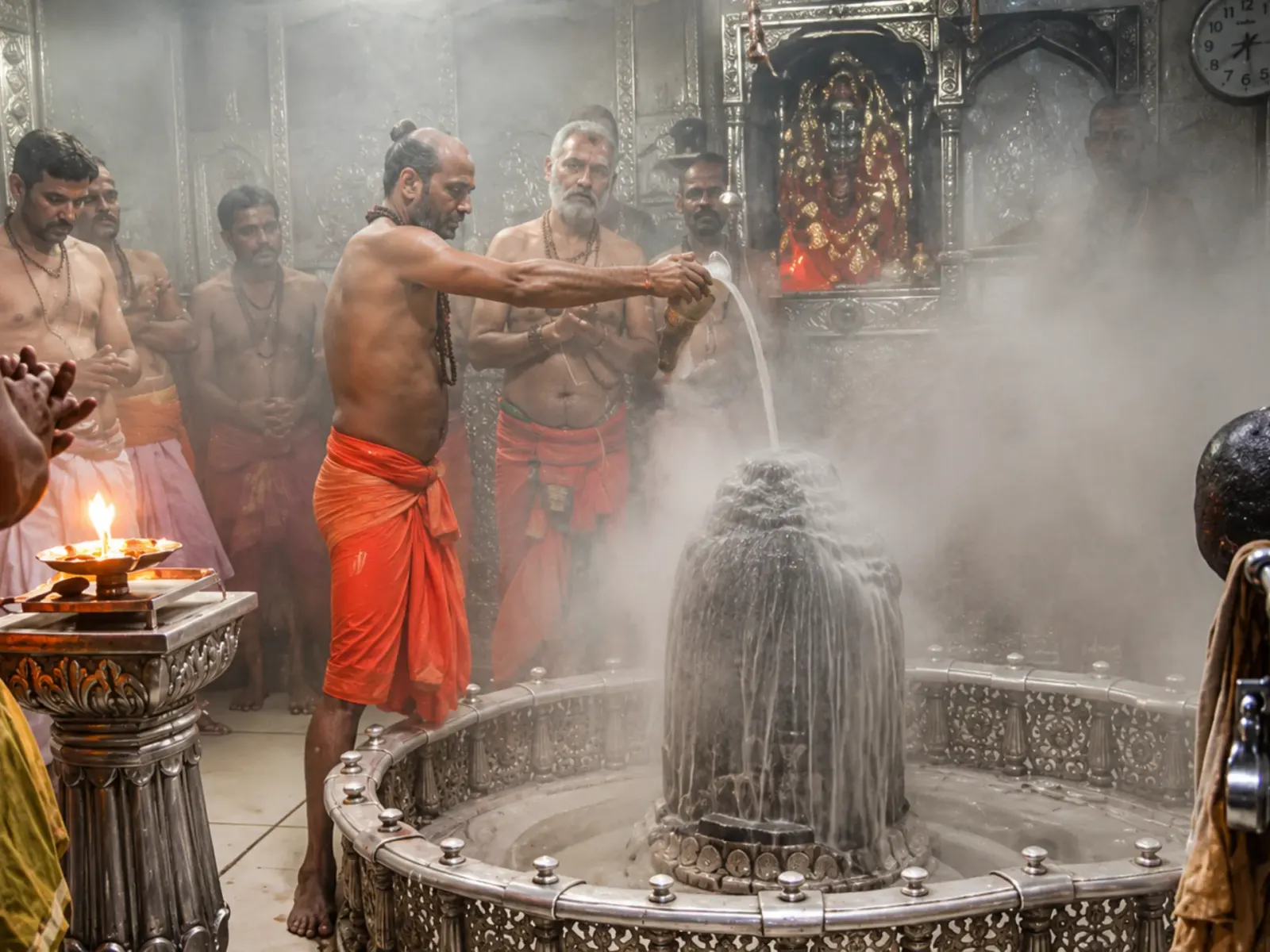
Trimbak adds its own pull. Trimbakeshwar temple is a Jyotirlinga, and just behind it on Brahmagiri is where the Godavari River begins, the river locals call Dakshin Ganga. Bathing near the source and then going straight in for darshan is, for a lot of devotees, the whole reason for coming.
Beyond the rituals the mela has a life of its own. Even Trimbak, small as it is, feels like a festival for weeks: Akhara camps, bhajans running late into the night, pravachans, and langars feeding thousands.
Two Towns, One Mela: Where the Nashik Kumbh Is Held
Nashik city and Trimbakeshwar, about 28 to 30 km apart by road. Most families try to see both.
Panchavati and the Nashik Side
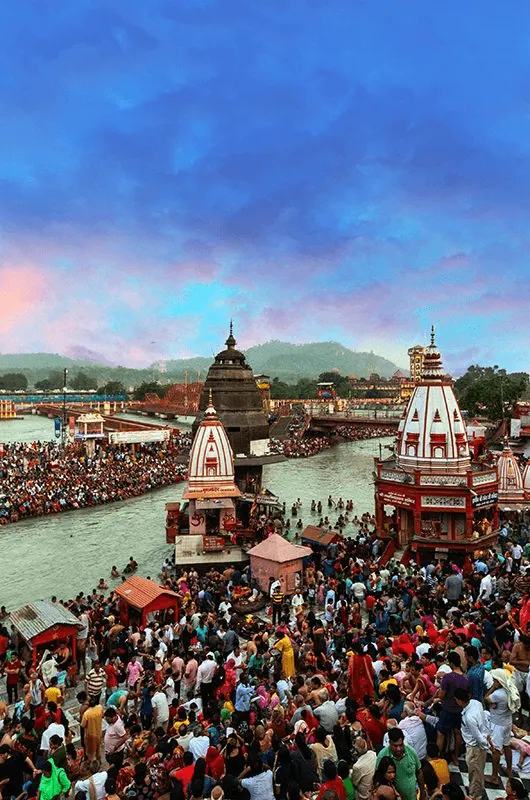
On the Nashik side, the mela revolves around Panchavati and its stretch of the Godavari River, with Ramkund at the centre. The old town around it, temples, narrow lanes, the phool market and puja shops, becomes part of the mela ground. Most hotels are in the city itself, which is why families usually find it the easier base. It also puts you close to the Godavari for an early dip.
Trimbak and Kushavarta
Up in the hills west of Nashik, Trimbak is a small town that grew around Trimbakeshwar temple. This is where the Shaiva Akhara processions happen, and the Shahi Snan at Kushavarta Kund. There just aren't many rooms here. In August it rains hard, and Brahmagiri can disappear into cloud for days at a time, so take rain gear that actually works. Darshan at Trimbakeshwar temple is busiest on Shravan Mondays, so plan your travel around that.
Ramkund and the Godavari River
On the Nashik side, the main bathing spot is Ramkund, a stone-lined tank built right into the Godavari in Panchavati. When there's an Amrit Snan the Vaishnava Akharas get the water first and everyone else follows. Visit on any normal evening and Ramkund is a different place, an aarti, a few families on the steps, nothing like the snan-day rush. The bathing doesn't stop between the big dates either, people bathe here every single day of the mela.
Planning the Journey: How to Reach Nashik for the Kumbh
The main baths are in the rains, so whatever the map app says, add time. For every route option in detail, see our guide to reaching Nashik and Trimbakeshwar.
Airports Near Nashik
Nashik's airport at Ozar is about 20 km out, with only a few flights. Most people fly into Mumbai, roughly 170 km away, or Pune at about 210 km, and drive the rest. Mumbai to Nashik is usually four to five hours, longer if Kasara ghat is having a bad day in the rain, which makes it the slowest stretch of the whole journey in the monsoon. If you're driving up from Mumbai, leave at dawn.
Getting to Nashik Road by Rail
The main railhead is Nashik Road, 8 to 10 km from Panchavati, with direct trains from Mumbai, Pune, Delhi, Bhopal, Nagpur and plenty of other cities. Mumbai to Nashik Road is three to four hours, the easiest option from the coast. Kumbh specials for pilgrims usually get announced nearer the time, so set a reminder for the day reservations open.
Highways and Bus Routes
By road, Nashik sits on the Mumbai–Agra highway, and MSRTC and private buses connect it with Mumbai, Pune, Aurangabad, Shirdi and Surat. Shirdi is only about 90 km off, so plenty of families add Sai Baba darshan to the same yatra. Ask us about transport from Shirdi if you're coming that way.
If you're travelling for an Amrit Snan, plan to reach a day early. People ignore this more than any other advice, and then regret it, because roads are diverted and private cars are parked far outside the city.
Getting Between Nashik and Trimbak
Ask pilgrims what wore them out and most will say getting around. Transport on the big days means leaving the car in a lot outside town, taking a shuttle, and then walking because vehicles can't get near Ramkund. Between Nashik and Trimbak there are MSRTC buses all day, and more get added for the mela. On ordinary days you'll find autos and shared jeeps up to Trimbakeshwar temple without trouble. On an Amrit Snan, though, transport between the two towns is packed from about 3 am.
One firm suggestion from us. Leave the car outside the city on a Shahi Snan day and take the shuttle, or even better, book a room you can walk from. That one decision makes transport a lot less stressful.
Choosing a Base: Where to Stay in Nashik During the Kumbh
Rooms are the first thing to run out. A room in Nashik, and in Trimbak even more, is often fully booked months ahead of the Amrit Snans. This table is a rough way to decide which area suits you:
| Area | Good for | Distance to Ramkund |
|---|---|---|
| Panchavati / Old Nashik | Walking to the ghat | 0–2 km |
| College Road / Gangapur Road | Mid-range and premium hotels | 4–6 km |
| Nashik Road | Train arrivals, budget rooms | 8–10 km |
| Trimbakeshwar town | Kushavarta, Shaiva Akharas, temple | 28–30 km |
| Igatpuri / Shirdi | Longer trips, quieter stays | 45–90 km |
Coming just for the Shahi Snan at Ramkund? Then Panchavati or the old city is the obvious pick. Trimbak is a different trip, so either stay up there or on the Nashik road towards it. Comfort-first families usually end up on College Road or Gangapur Road, where most of the larger hotels sit, and ride the shuttle in. And if you've come for the Shaiva bath specifically, a room in Trimbak saves you a long early-morning drive.
For the August and September baths, aim to book three to four months out. We also book for bhajan mandals, temple trusts and those big family trips where the number of people coming changes every week.
Hotels in Nashik for the Kumbh
Hotels in Nashik cover a wide spread, from no-frills lodges near Nashik Road station to proper business hotels on College Road and Gangapur Road, and a few vineyard resorts out of town. There aren't many rooms close to Ramkund, so the earlier you ask the better.
Hotels Near Trimbakeshwar for the Shaiva Snan
Rooms in Trimbak are few, and mostly small guesthouses and lodges within walking distance of the temple and Kushavarta. They sell out first for the Shaiva Shahi Snan every time. If Trimbak is your plan, book the room before anything else, even before the train.
Affordable Rooms and Dorms
Budget rooms exist, pilgrims on a tight budget just have to move early. Look at the lodges around Nashik Road station, dorm beds, and samaj bhavans and trust-run rooms, which are some of the most basic rooms going but perfectly fine for a few nights. Tent cities near the mela area are another option. Plain, clean enough, and near a bus stop, though not close to Ramkund. Ask us and we'll compare these with cheaper hotels for your dates.
Upscale Hotels and Vineyard Resorts
For more comfort, there are business hotels, a few vineyard resorts and some private villas. These work well for older guests, families with small kids and NRIs who want a driver on call for the week, and most can set up a trip to Trimbakeshwar temple. A few even have rooms looking out over the Godavari.
Staying With a Family: Homestays
A homestay means living with a local family for a few days, usually in Panchavati, on Gangapur Road or in the older lanes near the Godavari. Breakfast might be misal or pohe, dinner varan-bhaat, and someone in the house will always know which road the police are closing tomorrow. It's usually cheaper than a hotel. For a family of four, it can cost less than two hotel rooms. Each house only has two or three rooms for guests, so if you want one for an Amrit Snan, book it before you book the train.
Tent Camps on the Mela Grounds
For the Simhastha, both the government and private companies put up tent cities on open land near the mela, mostly for pilgrims who want to be right in the thick of it. A standard tent gets you a bed off the ground, bedding, a plug point, hot water in a shared or attached bathroom and simple veg meals. Monsoon is the catch. Before paying, ask if the floor is raised and the paths between tents are covered, because mud is the main complaint people have. For the comfortable version, see our partner camp below.
Ashrams, Dharamshalas and Samaj Bhavans
Ashrams and dharamshalas are popular with older pilgrims, both in Panchavati near the Godavari and up in Trimbak next to Trimbakeshwar temple. They're cheap, basic and close to the water. Many lock their gates at night and expect you to follow their routine, so ask first. If that feels too strict, Trimbak's guesthouses are a short walk from most of its ashrams. Book with them directly or through Teerthayan. For older pilgrims who still want privacy, a ground-floor homestay is a good middle ground.
Luxury Camp at the Nashik Kumbh
We book Kumbh camps with our partner Pulp Hotels. Their Simhastha Kumbh Luxury Camp is in the Tapovan–Panchavati Kumbh area on the Sadhugram side of Nashik, a short walk from Ramkund and close to Kalaram temple and Sita Gufa. Trimbakeshwar is about 30 km away, so the camp suits families bathing at Ramkund who want a day trip for darshan at Trimbak.
| Tent | Inside | Guests | Rate from (per night) |
|---|---|---|---|
| Deluxe | Twin or double beds, wooden furniture, attached bathroom with hot water | Up to 3 | ₹13,500 |
| Luxury | Four-poster king bed, seating, attached bathroom with shower | Up to 3 | ₹15,500 |
| Royal | The largest, on a wooden deck with its own sit-out and wood-panelled bathroom | Up to 5 | ₹21,500 |
Rates are plus 18% GST, and go up around the Amrit Snans on 2 August, 31 August and 11–12 September 2027. Check-in is at 2 pm and check-out at noon. The Kumbh desk confirms the rate for your dates before you pay, and you pay at the camp, not online. In the monsoon a raised tent with its own bathroom makes a real difference. See the Nashik camp, photos and tents on our partner's site.
Places to See in Nashik Between Snans
Got a free day between baths? These are all close by and easy to fit into a yatra.
Jyotirlinga Darshan at Trimbakeshwar Temple
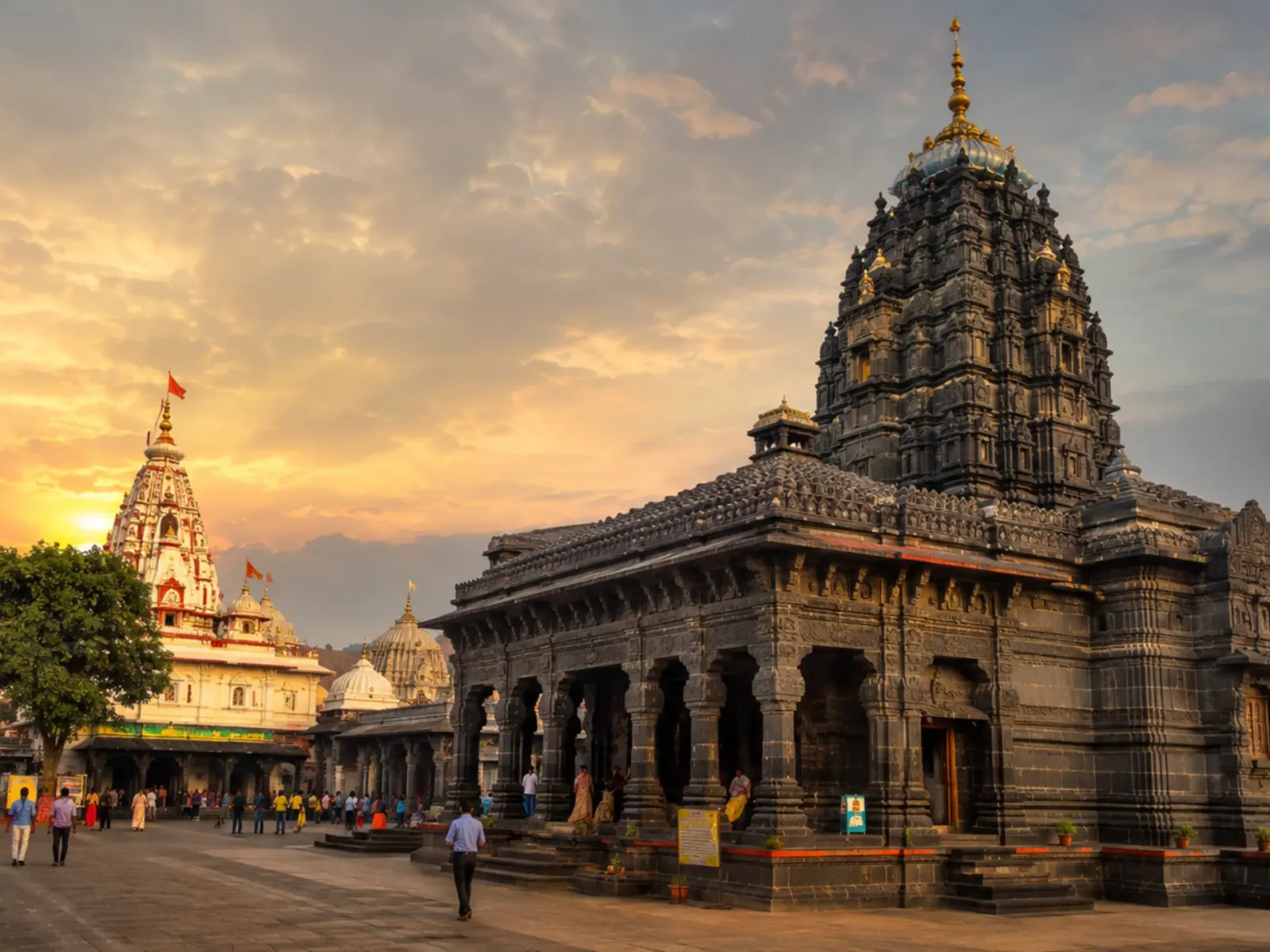
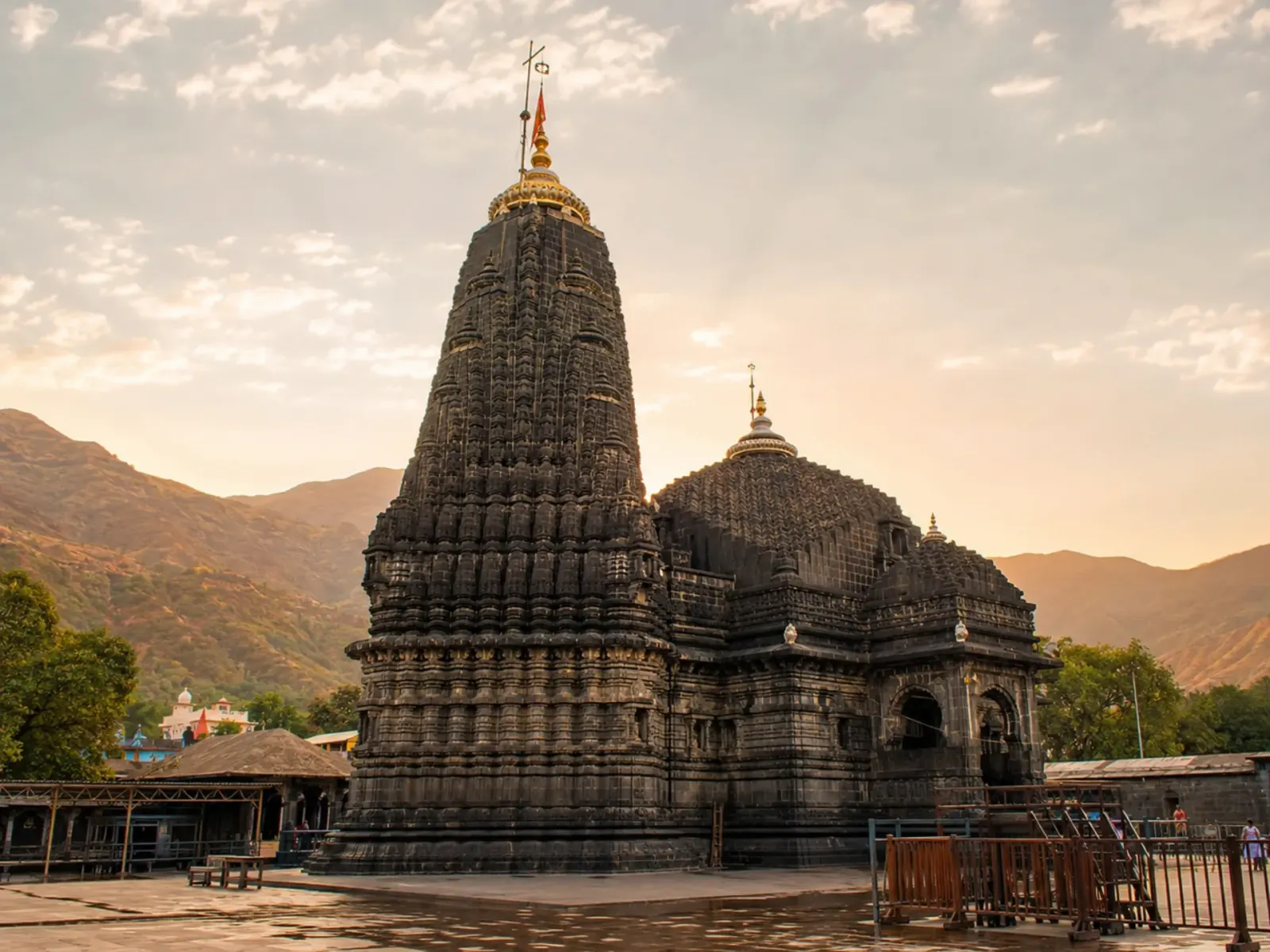
Built in dark basalt, Trimbakeshwar temple is one of the twelve Jyotirlingas, and its lingam is unusual, with three small faces standing for Brahma, Vishnu and Mahesh. Darshan queues during the mela can run for hours, so be there when it opens. There's a dress code for the inner sanctum, and men are sometimes asked to wear a dhoti. Outside the mela weeks, our Trimbakeshwar, Nashik and Shirdi yatra from Mumbai covers the same temples at an easier pace.
Sunset at Ram Kund Nashik
Even if your snan is at Trimbak, spend one evening at Ramkund for the aarti. Little diyas floating away on the Godavari, bells ringing from the Panchavati temples, families just sitting quietly on the steps. Completely different from a Shahi Snan morning.
Panchavati's Temples and Banyan Trees
The name Panchavati comes from five ancient banyan trees, and this is the area where Ram is believed to have lived during the exile. Kalaram temple, with its black-stone idol, and Kapaleshwar temple are a short walk apart. It's the best part of Nashik to explore on foot, and only a few minutes from Ramkund. Pilgrims often walk here straight after their dip.
A Quick Stop at Sita Gufa
Sita Gufa is a tiny cave in Panchavati associated with Sita. You squeeze through a low entrance and down a few steps, so anyone who dislikes tight spaces may want to wait outside. Ten minutes and you're done, and it's on almost every family's yatra list, along with the other sights in Panchavati.
If you've got extra days, add a few more sights: the Pandavleni caves cut into the hill, Someshwar waterfall (best seen in the rains), a vineyard visit for anyone in the group who isn't here for the Kumbh, and of course Shirdi. To cover the other Jyotirlingas of the state on the same trip, look at our Maharashtra Jyotirlinga circuit.
Practical Tips for the Monsoon Kumbh
Things we've seen go wrong for pilgrims, and how to avoid them.
Packing for the Monsoon
First thing in the bag is a poncho. Umbrellas get knocked about in a crowd and you end up holding a broken one. After that, quick-drying clothes and a full change for after the dip, a thin towel, and slippers that actually grip, the ghat steps get treacherous when wet. Add your usual medicines, a few plasters and Dettol wipes, a charged power bank and a photocopy of your ID. A zip-lock bag for the phone saves a lot of phones every season.
Safety on Wet Ghats
In the rains, the holy dip needs a bit more care than usual. A heavy night upstream and the Godavari can be noticeably higher and faster by morning. Only use the ghats that are officially open, hold onto the chains, and do whatever the lifeguards and water police say, they watch that river all day. Small kids stay within arm's reach, especially at Ramkund on a Shahi Snan morning. Pick a regrouping spot near the Godavari before you go in, something big and obvious, and put your phone and cash in a zipped inner pocket. Shahi Snan mornings are when this matters most.
Getting Through the Crowd
A few things help. Be in town the day before an Amrit Snan. Either go down to the water really early or leave it till the afternoon rush is over. Use the marked route to the Godavari even when a shortcut looks obvious; crowds turn dangerous when people improvise. And with elderly parents, honestly, choose an ordinary parvani snan day. Same Godavari, a small fraction of the crowd.
Booking Early
Rooms near Ramkund and in Trimbak are always the first gone for August and September, and the rates creep up week by week. Book your room the same day you fix your snan date. Cancellation terms are better when you're early, and you've a better shot at hotels near the water. A room booked late almost always means a longer walk.
We'll update this guide as the administration shares route, pass and facility details.
Yatras to Pair With Your Kumbh Trip
- Trimbakeshwar YatraTrimbakeshwar, Nashik and Shirdi from Mumbai.
- Maharashtra Jyotirlinga CircuitTrimbakeshwar with the other Jyotirlingas of Maharashtra.
- Bhimashankar YatraAnother Sahyadri Jyotirlinga, a short trip from Mumbai.
- How to Reach Nashik for the KumbhEvery route to Nashik and Trimbakeshwar by air, rail and road.
Read Next: Kumbh Mela Articles
- Kumbh Camp vs Hotel in Haridwar 2027: Which Stay Suits Your Family?Tent, hotel, ashram or homestay? How the Kumbh stays in Haridwar compare on distance to the ghat, cost and comfort, and which one suits your family.Read the article →
- Haridwar Kumbh Mela 2027 Trip Plan: How to Reach, Where to Stay, 3-Day ItineraryA practical plan for Haridwar Kumbh Mela 2027: choosing the snan day, getting there from Delhi, where to stay and a 3-day itinerary with Rishikesh.Read the article →
- Amrit Snan (Shahi Snan) Explained: Akharas, Order and Etiquette at the KumbhThe Amrit Snan is the morning the Akharas go into the river first. Here is what happens, in what order, where to watch from and how families can bathe safely afterwards.Read the article →
- Kumbh Mela With Elderly Parents and Children: A Practical Safety GuideMany families bring Dadi, Nanaji and the grandchildren to the Kumbh. With the right snan day, a room close to the water and a few habits, the trip is very manageable. Here is how.Read the article →
- Rituals at the Kumbh Mela: Snan Sankalp, Pind Daan, Rudrabhishek and MoreFor many families the puja matters as much as the dip. Here are the rituals most often performed at the Kumbh, what each involves and where it is done in Haridwar, Nashik and Ujjain.Read the article →
- How to Reach Nashik Kumbh Mela 2027: Air, Rail and RoadPlanning Kumbh Mela 2027? Discover how to reach Nashik by air, train and road, plus Nashik to Trimbakeshwar routes, travel tips and planning advice.Read the article →
Frequently Asked Questions
Officially from 31 October 2026, when the flag is raised, to 24 July 2028, when it comes down. The three main Amrit Snans fall on 2 August, 31 August and 11–12 September 2027.
Book Your Nashik Pilgrimage With Teerthayan
The Nashik Kumbh is the sort of trip many families plan once in a lifetime. Fix your snan date, choose a hotel, homestay, ashram or tent, and Teerthayan will handle the bookings from there. Rooms near the Godavari River go first, so don't wait.