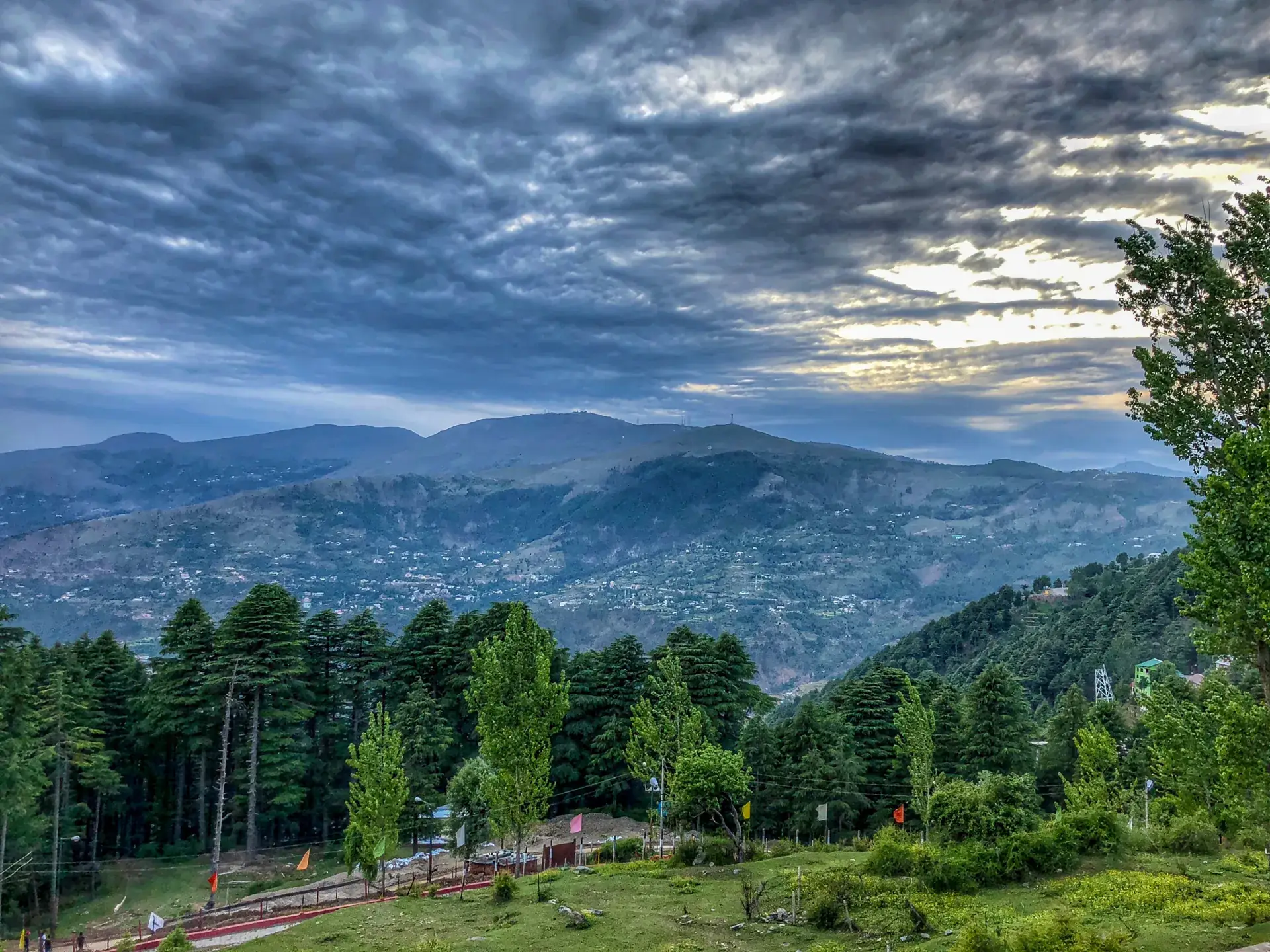
Shiv Khori is a natural cave shrine of Lord Shiva in Reasi district, a short walk from Ransoo. Here is how to reach it from Katra and what to expect inside.
Shiv Khori is a natural cave shrine of Lord Shiva in the hills of Reasi district, Jammu and Kashmir. It lies about 75 to 80 km from Katra, and pilgrims reach it by road to Ransoo and then a walk of about 3 km. Many families visit it the day after Mata Vaishno Devi darshan. This guide covers the story of the cave, the walk from Ransoo, what you will see inside, how to reach it and how to fit it into a Vaishno Devi yatra.
Why Shiv Khori is sacred
Khori means cave. Local tradition holds that Lord Shiva took shelter in this cave after granting the demon Bhasmasur the boon that anyone he touched on the head would turn to ash. Bhasmasur tried to use the boon on Shiva himself, and Lord Vishnu, appearing as Mohini, tricked him into touching his own head. The cave where Shiva waited is worshipped as Shiv Khori.
Inside is a naturally formed Shivling, with water dripping onto it from the rock above. Devotees also point out formations they identify with Mata Parvati, Lord Ganesha and Nandi, and snake-like patterns on the roof. Pigeons in the cave are taken as a good sign. A local belief says the cave once led all the way to Amarnath; whatever you make of it, the inner passage is closed to visitors.
Shiv Khori at a glance
| Detail | What to expect |
|---|---|
| Location | Near Ransoo, Pouni area, Reasi district, Jammu and Kashmir |
| From Katra | About 75 to 80 km, around 3 hours by road |
| From Jammu | Roughly 110 to 140 km depending on the route |
| Walk | About 3 km each way from Ransoo on a paved path |
| The cave | About 200 m long, about 1 m wide in places, 2 to 3 m high |
| Main festival | Three-day mela at Maha Shivratri |
| Managed by | Shri Shiv Khori Shrine Board, Ransoo |
The walk from Ransoo
Vehicles stop at Ransoo, the base camp, where there are parking, shops, a reception area and toilets. From here a paved path of about 3 km climbs along the hillside to the cave. The Shrine Board has added railings, water points and resting places along the way. The gradient is steady rather than steep, but there are steps near the top.
- Most pilgrims take 1 to 1.5 hours up and a little less coming down.
- Ponies can be hired at Ransoo for those who cannot walk the distance. Agree the rate at the official counter before you start.
- Wear shoes with grip. The path and the cave floor can be wet.
- Carry water and a light rain layer. Shade is limited on parts of the path.
Inside the cave
The first chamber is wide enough for a few hundred people to stand. After that the cave narrows. In places the passage is only about a metre wide and you may need to bend or turn sideways for a few steps before it opens into the chamber with the Shivling. Queues move slowly on busy days because only a few people fit at a time.
Follow the instructions of the shrine staff, keep your phone away in the inner chamber and move on after darshan so the line keeps moving. Pilgrims who feel uneasy in tight spaces can ask to go with a family member and take it slowly; the narrow stretch is short.
How to reach Shiv Khori
From Katra
Katra is the usual base. The drive to Ransoo takes about 3 hours through Reasi on hill roads, so leave early, ideally by 7 am, to finish darshan and be back in Katra by evening. Shared jeeps and buses run on the route, but a private taxi gives you control over the timing, which matters with elderly parents.
From Jammu
From Jammu it is a longer drive of roughly 110 to 140 km. Most people do not visit directly from Jammu but stay at Katra and go from there.
By rail and air
The nearest railway station is Shri Mata Vaishno Devi Katra. The nearest airport is Jammu. Both are a road journey away from Ransoo.
Best time to visit
- March to June: pleasant days, though May and June are warm on the walk. Start early.
- July to August: monsoon rain can bring slips on the hill roads. Keep a spare day.
- September to November: clear, comfortable weather.
- December to February: cold mornings, but the shrine stays open. Maha Shivratri falls in February or early March and draws very large crowds for its three-day mela.
Combining Shiv Khori with Vaishno Devi
The simplest plan is one day for the Vaishno Devi trek or helicopter and Bhairon Ji, and the next day for Shiv Khori from Katra. Trying to do both on the same day is not realistic. If you have an extra day, Patnitop, a hill resort on the Jammu–Srinagar highway, makes a restful end to the trip.
Our Vaishno Devi Yatra with Shiv Khori and Patnitop follows exactly this plan over 5 days and 4 nights from Jammu: arrival in Katra, a full day for Vaishno Devi, a day for Shiv Khori, a night in Patnitop and the drive back to Jammu. It starts from ₹14,900 per person, with breakfast, dinner and private road transport.
Practical tips
- Carry the same photo ID you used for Vaishno Devi registration; checks are common in the region.
- Leather items are best left in the vehicle.
- There are small eateries at Ransoo. Food near the cave is limited, so eat before you start the walk.
- Keep cash for the pony, parking and offerings, as mobile signal can be weak.
- Check the weather and road status the evening before, especially in the monsoon.
Plan your Shiv Khori yatra
Shiv Khori is a quiet, moving darshan after the crowds of Vaishno Devi: a walk through the hills and a few minutes inside the cave with the Shivling. Tell us your dates and group size on our contact page and we will plan the days, the vehicle and the hotels around your pace.
FAQs
How far is Shiv Khori from Katra?+
About 75 to 80 km by road, which takes around 3 hours each way. Most pilgrims visit it as a full-day trip from Katra after Vaishno Devi darshan.
How long is the Shiv Khori trek?+
About 3 km each way on a paved path from Ransoo, the road head. Allow 3 to 4 hours for the walk up, darshan and the walk back. Ponies are available at Ransoo.
Is the Shiv Khori cave difficult to enter?+
The cave is about 200 m long and in places only about a metre wide, so you may need to stoop or turn sideways. Pilgrims who are uncomfortable in tight spaces should go with someone and take it slowly.
When is the best time to visit Shiv Khori?+
March to June and September to November are comfortable. Maha Shivratri, in February or early March, brings a three-day mela and the largest crowds. Monsoon rain can affect the hill roads.
Can I do Vaishno Devi and Shiv Khori in one trip?+
Yes. Keep one day for Vaishno Devi and a separate day for Shiv Khori from Katra. Doing both on the same day is not practical.
Who manages the Shiv Khori shrine?+
The Shri Shiv Khori Shrine Board, Ransoo, chaired by the Divisional Commissioner of Jammu, manages the shrine, the path and the facilities at the base.
Share this article