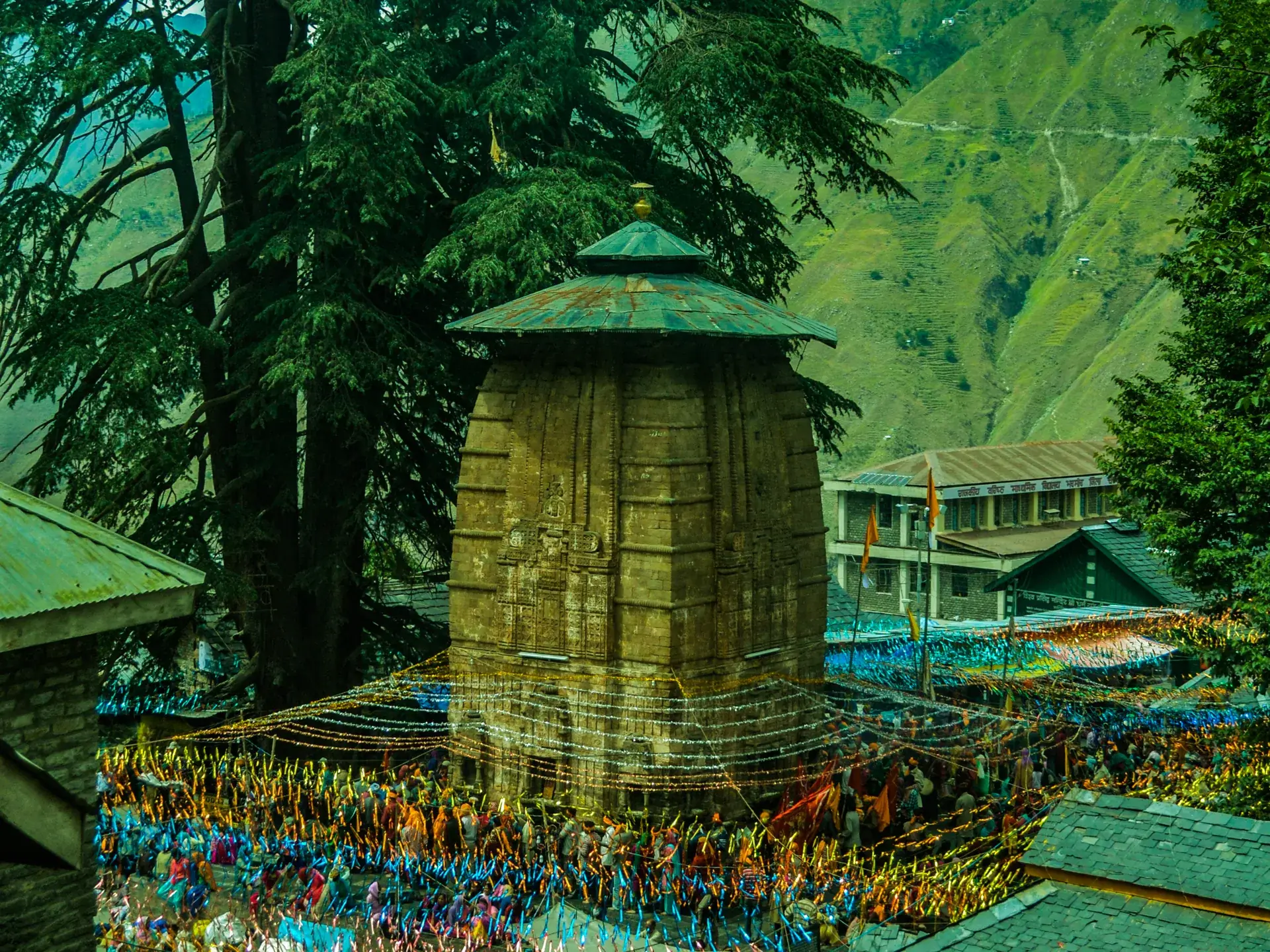
How the Manimahesh Yatra works: registration, the Hadsar to Manimahesh Lake trek, when to go and how to plan six days from Chandigarh.
By Teerthayan • October 2026
The Manimahesh Yatra is a Himalayan pilgrimage to Manimahesh Lake, a glacial lake at about 4,080 m beneath Manimahesh Kailash peak in the Bharmour area of Chamba district, Himachal Pradesh. Pilgrims drive to Hadsar, 13 km beyond Bharmour, and trek roughly 13-14 km up to the lake, usually breaking the climb at Dhancho. The official yatra runs for a few weeks in August and September, between Janmashtami and Radha Ashtami, and every pilgrim must register online with the district administration before setting out. This guide explains how the Manimahesh Yatra 2027 is likely to work, so you can plan early.
Why Manimahesh matters
Manimahesh Kailash is one of the five peaks counted among the Panch Kailash, along with Kailash Mansarovar in Tibet, Adi Kailash, Kinnaur Kailash and Shrikhand Mahadev. Devotees believe Lord Shiva resides on the peak, and that the lake below is where he and Goddess Parvati are worshipped together. The holy dip in the lake on Janmashtami is called the Chhoti Nhauni and the dip on Radha Ashtami is the Badi Nhauni, and these two days draw the largest crowds of the season.
Bharmour, the old capital of the Chamba kings, is the spiritual gateway. Its Chaurasi Temple Complex holds 84 ancient shrines in one compound, and many pilgrims visit Bharmani Mata temple above the town before going up to the lake.
Manimahesh Yatra 2027 dates and registration
The exact dates for 2027 have not been announced yet. The district administration fixes them each summer around Janmashtami and Radha Ashtami, and publishes them on the official Shri Manimahesh Yatra portal. For reference, the portal listed the 2026 journey window as 25 August to 20 September.
- Registration is mandatory. You register online on the official portal and receive a yatra permit, which is checked on the route. Registration usually opens a few weeks before the yatra starts.
- Daily limits. In 2026 the administration capped the number of pilgrims allowed each day and said it could change the cap on the main snan days depending on weather and route capacity. Expect similar rules in 2027.
- Medical fitness. The portal provides a medical form. Carry a fitness certificate from a registered doctor, especially if you are over 50 or have a heart, lung or blood pressure condition.
- Identity proof. Keep the original photo ID you used for registration with you on the trek.
- Weather suspensions. The yatra can be paused at short notice during heavy rain or landslides, so keep a spare day in your plans.
The route: Chandigarh to Manimahesh Lake
Most pilgrims from north India travel by road through Pathankot to Chamba, then up the Ravi valley to Bharmour and Hadsar. The nearest railhead is Pathankot, and the nearest airports are Pathankot and Kangra (Gaggal), though flights are limited.
| Stage | Distance | How |
|---|---|---|
| Chandigarh to Chamba | about 400 km | Road, 10-12 hours |
| Chamba to Bharmour | about 65 km | Road, around 3 hours |
| Bharmour to Hadsar | about 13 km | Road |
| Hadsar to Dhancho | about 7 km | Trek, along the Budhil river |
| Dhancho to Manimahesh Lake | about 6 km | Trek, via Sundrasi and Gauri Kund |
The trek, stage by stage
Hadsar to Dhancho is the gentler half. The path climbs steadily through forest beside the stream, and Dhancho has tented camps and langars during the yatra. Spending a night here helps your body adjust to the altitude.
Dhancho to the lake is steeper. After Sundrasi the trail rises above the trees to Gauri Kund, where women pilgrims traditionally bathe, and then the last stretch reaches the lake. Pilgrims take a dip, offer prayers facing the peak, and come back down to Dhancho or Hadsar the same day.
A helicopter shuttle runs from Bharmour towards Gauri Kund during the yatra. Tickets are sold through the official portal and at the helipad counter, subject to availability and weather. It is booked by the pilgrim directly and is not part of a road package.
A six-day plan with Teerthayan
Our Manimahesh tour package from Chandigarh covers the yatra in 5 Nights / 6 Days from Chandigarh, priced at ₹ 19,500. The plan is:
- Chandigarh to Chamba by road.
- Chamba sightseeing (Laxmi Narayan temples, Chamunda Devi, Bhuri Singh Museum), then Bharmour and the Chaurasi Temple Complex.
- Drive to Hadsar, registration formalities, trek to Dhancho and stay in tents.
- Trek to Manimahesh Lake for the holy dip and darshan, then back to Dhancho.
- Trek down to Hadsar and drive to Chamba.
- Return drive to Chandigarh.
The package includes accommodation (two nights in Chamba, one in Bharmour and two in a tented camp at Dhancho), daily breakfast and dinner, private AC road transfers from Chandigarh to Chandigarh, yatra registration assistance at Hadsar, a trained trek guide and support staff, basic first aid on the trek, toll, parking and driver charges, and 24×7 travel assistance. GST is extra.
Best time and weather
The official yatra season in August and September is the only time the route is staffed with camps, medical posts and rescue teams. It is also monsoon season in Chamba, so expect rain on the drive and wet, slippery stretches on the trek. Days at the lake can be bright, but nights at Dhancho are cold, and the temperature at the lake can fall close to freezing.
Fitness and what to carry
You do not need trekking experience, but you do need stamina for two long trekking days. Start walking 4-5 km a day and climbing stairs at least a month before you go. Pony and porter services operate on the route during the yatra at rates fixed by the administration.
- Waterproof jacket, warm fleece, thermal inner wear and a woollen cap
- Trekking shoes with good grip, plus a spare pair of socks in a plastic bag
- A walking stick, torch, sunscreen and sunglasses
- Personal medicines, ORS and dry fruits
- A change of clothes for after the holy dip
Our what to carry on a pilgrimage checklist has a fuller list. If you are planning more Himalayan yatras, read the Hindu pilgrimage calendar for 2027 or look at the Kinnaur Kailash Yatra and Shrikhand Mahadev Yatra, two more of the Panch Kailash.
Tips for a smooth Manimahesh Yatra
- Register as soon as the portal opens, especially if you want to reach the lake on Janmashtami or Radha Ashtami.
- Start the trek early in the morning. Afternoon clouds and rain are common.
- Do not rush the climb. Breathlessness, headache and nausea are signs of altitude sickness, and the remedy is to stop and go down.
- Carry your waste back down. The lake and the meadows are fragile.
- Follow announcements from the police and the administration, and do not trek after dark.
FAQs
When is the Manimahesh Yatra in 2027?+
The official dates are announced each summer by the Chamba district administration. The yatra normally runs from Janmashtami to Radha Ashtami in August and September. In 2026 it ran from 25 August to 20 September.
Is registration compulsory for the Manimahesh Yatra?+
Yes. Every pilgrim must register on the official Shri Manimahesh Yatra portal and carry the permit and original photo ID on the trek.
How long is the Manimahesh trek?+
The trek from Hadsar to Manimahesh Lake is roughly 13-14 km one way: about 7 km to Dhancho and about 6 km more to the lake via Gauri Kund.
Is there a helicopter to Manimahesh?+
A helicopter shuttle runs from Bharmour during the yatra. Tickets are sold through the official portal and at the helipad counter, subject to weather and availability.
How difficult is the Manimahesh Yatra?+
It is a moderate to tough trek because of the altitude, about 4,080 m at the lake. Most healthy adults manage it with a night at Dhancho and some walking practice beforehand.
Share this article