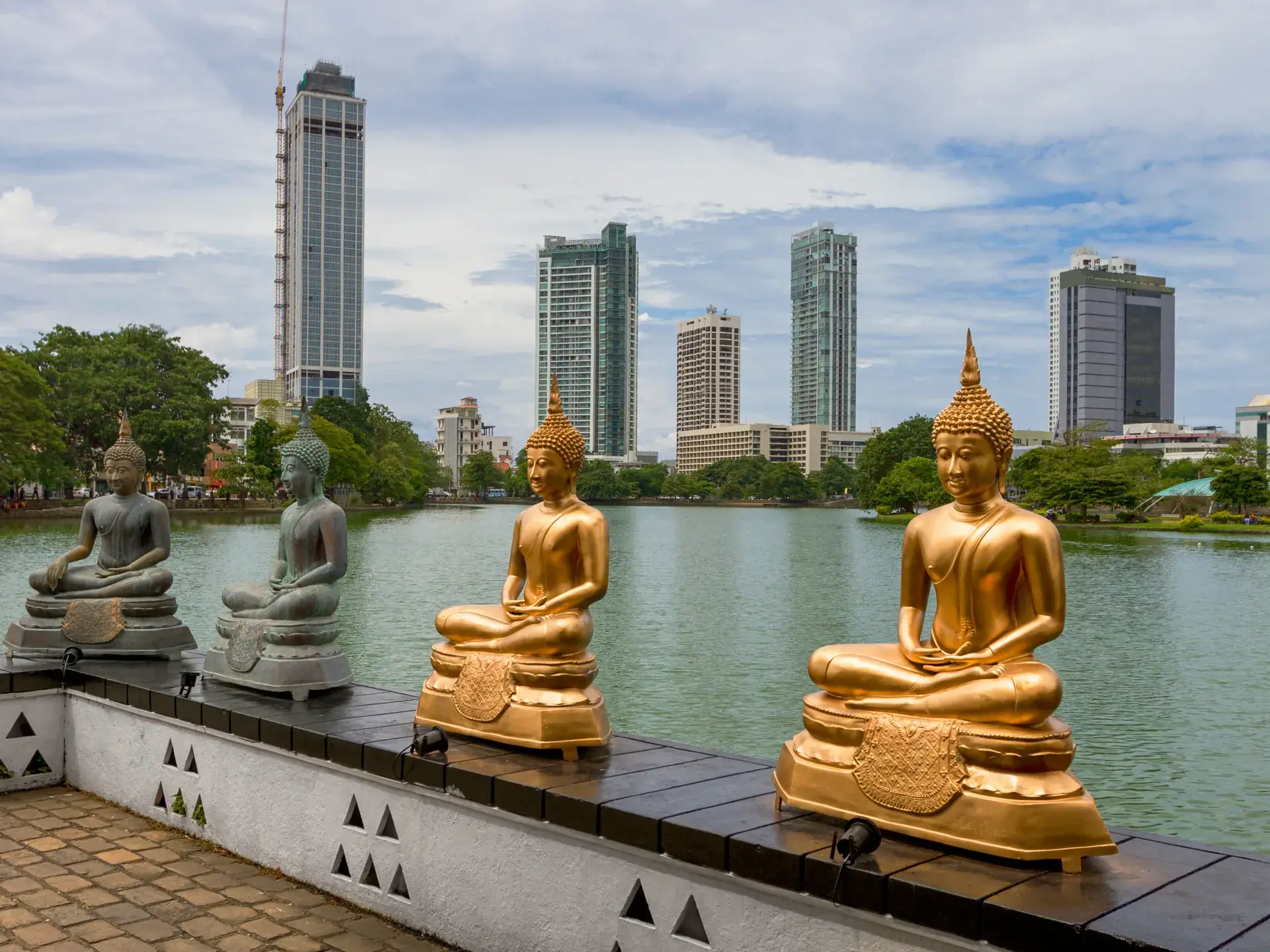
The Ramayana circuit follows Lord Rama's story from Ayodhya and Janakpur to Chitrakoot, Panchvati, Kishkindha, Rameshwaram and Sri Lanka. Here is each place in order, with travel and document tips.
By Teerthayan • October 2026
The Ramayana circuit is a chain of places linked to Lord Rama's life, running from Ayodhya in Uttar Pradesh and Janakpur in Nepal, through the exile forests of Chitrakoot and Panchvati, to Kishkindha near Hampi, Rameshwaram on the Tamil Nadu coast and the island of Sri Lanka. Covering all of it in one trip takes about two and a half weeks and crosses three countries. This guide lists the main Ramayana places in order of the story, how they connect, and the documents you need.
Ramayana places in India, Nepal and Sri Lanka at a glance
| Place | Country | Episode of the Ramayana |
|---|---|---|
| Ayodhya | India (Uttar Pradesh) | Birth of Rama, his kingdom on the Saryu |
| Janakpur | Nepal | Birthplace of Sita, marriage of Rama and Sita |
| Prayagraj and Shringverpur | India (Uttar Pradesh) | Bharadwaj Ashram; crossing of the Ganga with Nishadraj Guha |
| Chitrakoot | India (UP and MP border) | Years of exile, Bharat's meeting with Rama |
| Panchvati, Nashik | India (Maharashtra) | Forest home on the Godavari, Sita's abduction |
| Kishkindha, Hampi | India (Karnataka) | Meeting with Hanuman and Sugriva |
| Rameshwaram and Dhanushkodi | India (Tamil Nadu) | Shiva worship by Rama, Ram Setu |
| Nuwara Eliya, Chilaw, Ella | Sri Lanka | Ashok Vatika, Ravana's Lanka, Munneswaram |
North India and Nepal: birth and marriage
Ayodhya
Ayodhya is where the Ramayana circuit begins. The Ram Janmabhoomi temple, Hanuman Garhi on its hilltop, Kanak Bhawan and the Saryu ghats at Ram Ki Paidi are the core stops, and the evening Saryu aarti is worth staying for. Ayodhya now has its own airport, Maharishi Valmiki International Airport. Our Ayodhya, Varanasi and Prayagraj tour guide covers the city in more detail.
Janakpur, Nepal
Janakpur in Nepal's Madhesh plains is honoured as Sita's birthplace, the old capital of King Janak of Mithila. The white marble Janaki Mandir, the Vivah Mandap marking the wedding, and the sacred ponds of Ganga Sagar and Dhanush Sagar are the main sights. Dhanushadham, linked to the breaking of Shiva's bow, is a short drive away. The road from Ayodhya takes a full day including the border crossing.
Central India: the exile years
Prayagraj, Shringverpur and Chitrakoot
At Prayagraj, the Bharadwaj Ashram recalls the sage who hosted Rama, Sita and Lakshman at the start of their exile. Shringverpur, upstream on the Ganga, is where the boatman-king Nishadraj Guha ferried them across. Chitrakoot, on the Mandakini, is where they spent many of their fourteen forest years: pilgrims bathe at Ramghat, walk the parikrama of Kamadgiri hill, and visit Bharat Milap, Sphatik Shila, Janki Kund, Hanuman Dhara and the Gupt Godavari caves.
Panchvati, Nashik
Panchvati on the Godavari is the forest home from which Sita was taken by Ravana. Sita Gufa, the Kalaram temple with its black stone image of Rama, Ramkund and Tapovan are all within the old town. Trimbakeshwar Jyotirlinga is close by if you have a spare day.
South India: Kishkindha and the Setu
Kishkindha, near Hampi
Around Hampi on the Tungabhadra, local tradition places the monkey kingdom of Kishkindha. Anjanadri Hill, climbed by several hundred steps, is honoured as Hanuman's birthplace; Rishyamukha, Pampa Sarovar (linked to Shabari) and Sugriva's cave complete the story, and the Virupaksha temple is in the same area.
Rameshwaram and Dhanushkodi
Rameshwaram is where Rama is said to have worshipped Shiva before and after the war, and the Ramanathaswamy temple is also one of the twelve Jyotirlingas, known for its long pillared corridors and the sacred wells inside. Pilgrims bathe at Agni Theertham first. Dhanushkodi, at the tip of Pamban Island, is where Ram Setu is believed to begin; the Kodandarama temple and Gandhamadhana Parvatham with Rama's footprints are nearby. Access to Dhanushkodi follows local rules and is usually limited to daylight hours. For other temples in the region, see our South India temple tour guide.
Sri Lanka: the Lanka of the Ramayana
In Sri Lanka the trail moves through the hill country. The Seetha Amman temple at Sita Eliya near Nuwara Eliya is built where tradition places Ashok Vatika, with the Hakgala gardens close by. Divurumpola is linked to Sita's agni pariksha, Ravana Falls and Ravana Cave are near Ella, and Munneswaram near Chilaw is where Rama is said to have prayed to Shiva after the war. Kelaniya near Colombo is associated with Vibhishana.
Documents and travel rules
- Nepal: Indian citizens do not need a visa. Carry a valid Indian passport or an original Election Commission voter ID card. Aadhaar is not accepted as travel ID by the Embassy of India in Kathmandu.
- Sri Lanka: a passport is needed, and every visitor must get an Electronic Travel Authorisation (ETA) before arrival from the official Sri Lanka ETA website. Since 25 May 2026 the 30-day tourist ETA has been free of charge for Indian nationals, but the online application is still compulsory.
- Currency: Indian rupees, Nepalese rupees and Sri Lankan rupees; carry some cash for each country and a forex card.
- Season: October to March is the comfortable window for the whole circuit, avoiding the north Indian summer and the main monsoon.
Doing the whole Ramayana circuit in one trip
Because the circuit spans the length of the subcontinent, flights save several days. Our Sampoorna Ramayana Yatra is 17 Nights / 18 Days from ₹ 1,45,000, starting in Delhi. It follows the story in order from Ayodhya to Sri Lanka and includes 17 nights accommodation, daily breakfast and dinner, the flights listed in the itinerary (Delhi to Ayodhya, the India-sector flights, India to Colombo and Colombo to Delhi), road transfers by private AC vehicle, India-Nepal border assistance, Sri Lanka ETA processing assistance, a tour manager or local guides, and 24x7 travel assistance. GST, lunch, passport fees, entry fees and special puja are extra. Shorter India-only or Sri Lanka-only versions can be discussed if two and a half weeks is too long.
FAQs
Which places are on the Ramayana circuit?+
The main places are Ayodhya, Janakpur in Nepal, Prayagraj and Shringverpur, Chitrakoot, Panchvati in Nashik, Kishkindha near Hampi, Rameshwaram and Dhanushkodi, and Ramayana sites in Sri Lanka such as Sita Eliya, Ella and Munneswaram.
How many days does the full Ramayana circuit take?+
Covering India, Nepal and Sri Lanka in story order takes about 17 to 18 days using some domestic and international flights. An India-only circuit can be shorter.
Do Indians need a visa for the Ramayana sites in Nepal and Sri Lanka?+
Nepal needs no visa; carry a valid passport or an original voter ID. Sri Lanka needs a passport and an online ETA before arrival, which has been free for Indian nationals since 25 May 2026.
Is Aadhaar accepted for travel to Janakpur, Nepal?+
No. The Embassy of India in Kathmandu lists a valid passport or an original Election Commission voter ID card as the accepted documents for Indian citizens.
What is the best season for a Ramayana yatra?+
October to March suits the whole route, avoiding the north Indian summer heat and the main monsoon months.
Share this article