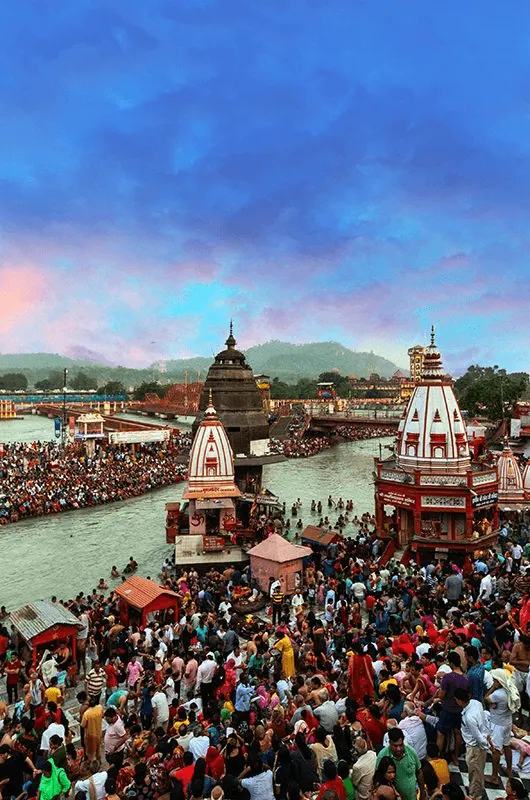
The thirteen akharas, the Naga sadhus and the Peshwai (now Chhavni Pravesh) explained — and how to watch them respectfully at the Haridwar Kumbh 2027.
By Teerthayan • October 2026
The akharas are the monastic orders of sadhus that give the Kumbh Mela its shape. Thirteen of them are recognised to bathe at the great melas, and their grand procession into the Kumbh city — once called the Peshwai — is one of the most watched sights of the gathering. At the Haridwar Ardh Kumbh in 2027 (14 January to 20 April 2027) you will see the akharas at the Kumbh Mela lead the Amrit Snan on the main bathing mornings. This guide explains the thirteen akharas, who the Naga sadhus are, what the Peshwai (now officially renamed Chhavni Pravesh) is, and how to watch it all with respect.
What is an akhara?
An akhara is an organised order of Hindu ascetics — part monastery, part regiment. The word itself comes from a wrestling arena, and historically the akharas trained sadhus who could both meditate and, when needed, defend temples and pilgrims. Today they are the spiritual bodies that run sadhu life at the Kumbh. Each has its own guru lineage, or sampradaya, its own deity, flag and camp, and its own mahants, or abbots. The umbrella body that coordinates them is the Akhil Bharatiya Akhara Parishad.
The 13 akharas and their three families
Thirteen akharas are recognised to take part in the Kumbh's main snans. They fall into three families by tradition, as the table shows.
| Family (sampradaya) | Devoted to | Akharas | Well-known names |
|---|---|---|---|
| Shaiva / Sanyasi | Lord Shiva | 7 | Juna, Niranjani, Mahanirvani, Atal, Avahan, Agni, Anand |
| Vaishnava / Bairagi | Lord Vishnu and Ram | 3 | Nirvani, Nirmohi, Digambar |
| Udasin and Nirmal | Guru Nanak's lineage | 3 | Bada Udasin, Naya Udasin, Nirmal |
The seven Shaiva, or Sanyasi, akharas are the largest and most visible, and it is these that are home to the Naga sadhus. The Juna Akhara is the biggest of all. The three Vaishnava, or Bairagi, akharas follow the Ram tradition, while the three Udasin and Nirmal akharas trace their line to Guru Nanak and sit between Hindu and Sikh monastic practice. Seven plus three plus three makes the thirteen akharas you will hear named at the Kumbh Mela.
Who are the Naga sadhus?
The Naga sadhus are the ash-smeared, mostly sky-clad ascetics who draw the crowds. They belong to the Shaiva akharas, take hard renunciant vows, and historically formed the warrior wing of the orders. At the Kumbh they lead the Amrit Snan: on the big bathing mornings the Nagas enter the water first, before ordinary pilgrims, and only once they have bathed is the ghat opened to everyone else. Watching them march to the river, tridents raised and conches sounding, is for many the heart of the mela.
The Peshwai, now the Chhavni Pravesh
Weeks before the main snans, each akhara makes a ceremonial entry into the Kumbh city and settles into its camp. This royal procession — saints on elephants, horses, camels and decorated chariots, with bands, flags, drums and silver maces — was long known as the Peshwai. From 2025 the administration renamed it the Chhavni Pravesh, meaning "camp entry", the same renaming that turned Shahi Snan into Amrit Snan. For many visitors the Peshwai is more rewarding to watch than the snan itself: it moves slowly through the streets, so you can see the akharas, their emblems and their sadhus up close in daylight.
The akharas at the Haridwar Kumbh 2027
Haridwar 2027 is officially an Ardh Kumbh — you can read why in our guide to Ardh, Purna and Maha Kumbh. The mela runs from 14 January to 20 April 2027 with ten main bathing days. The three Amrit Snans fall on 6 March (Mahashivratri), 8 March and 14 April 2027 (Mesh Sankranti / Baisakhi) at Brahma Kund, Har Ki Pauri. On these mornings the akharas bathe in a fixed order and the river front is closed to the public while they do. For that bathing order and the etiquette of the day, see our Amrit Snan guide. Uttarakhand Tourism lists the official Kumbh information on its website.
How to watch the akharas respectfully
- Stand along the procession route, not inside an akhara camp — the camp is the sadhus' home.
- Ask before photographing a sadhu. Many will agree; some will not, and that is their right.
- Do not touch ritual objects — the chimta (tongs), trident or dhuni fire — unless you are invited to.
- Stay out of the cordoned ghats during the Amrit Snan hours; those belong to the akharas.
- Dress modestly, keep children close, and move with the crowd rather than against it.
Visiting the akhara camps
Between the big days the camps are open and calm. Many keep a dhuni, a sacred fire, and run a free langar, or community kitchen, and some mahants give darshan to visitors. Go as a guest: remove your shoes, sit where you are shown, and offer a small donation if you share a meal. It is a quieter way to understand the akharas at the Kumbh Mela than the crush of a snan morning.
Planning to see the Peshwai or a snan
Decide first whether you want the colour of the Peshwai or the scale of an Amrit Snan, then book a stay early, because rooms and camps near Har Ki Pauri fill fast around the main dates. You can book a Kumbh camp or hotel through Teerthayan's Haridwar Kumbh page, and plan your days with the Haridwar Kumbh trip plan. Arrive a day before any procession or snan you want to see, so you are already inside the city when the roads close.
FAQs
How many akharas are there at the Kumbh Mela?+
Thirteen akharas are recognised to take part in the main snans — seven Shaiva (Sanyasi) akharas, three Vaishnava (Bairagi) akharas, and three Udasin and Nirmal akharas. The Juna Akhara is the largest of them.
What is the Peshwai at the Kumbh?+
The Peshwai is the ceremonial procession in which each akhara enters the Kumbh city and takes up its camp, with saints on elephants, horses and chariots. Since 2025 it is officially called the Chhavni Pravesh.
Who are the Naga sadhus?+
Naga sadhus are the ash-smeared, mostly unclothed ascetics of the Shaiva akharas. They take strict renunciant vows and lead the Amrit Snan, entering the river before other pilgrims.
Can I take photographs of the sadhus?+
Usually yes, but always ask first. Many sadhus are happy to be photographed; some prefer not to be, and their wishes should be respected. Never touch their ritual objects without being invited.
When will the akharas bathe at Haridwar in 2027?+
The three Amrit Snans at the Haridwar Ardh Kumbh fall on 6 March, 8 March and 14 April 2027 at Har Ki Pauri. The akharas bathe first on these mornings, and the ghats open to the public afterwards.
Share this article