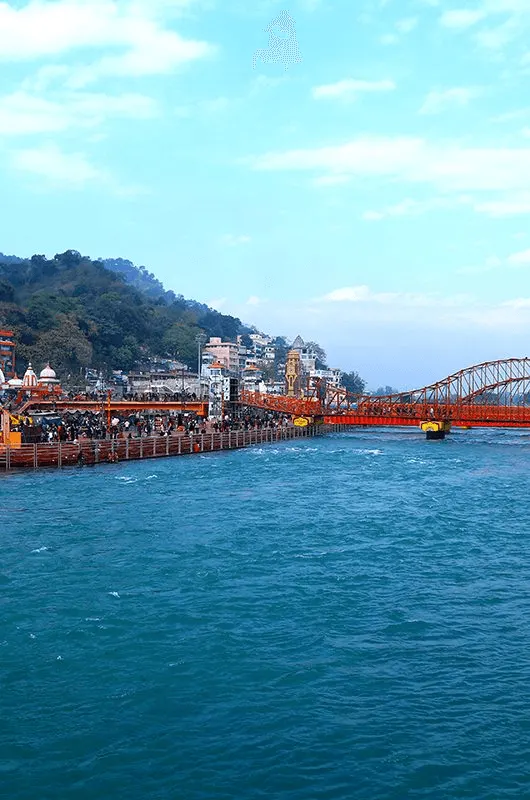
Kankhal, just south of Haridwar, is where Daksha's yagna took place and Sati gave up her life. Here is how to visit the Daksheshwar Mahadev temple and Sati Kund.
Kankhal, a quiet old town on the Ganga about 4 km south of Haridwar, is where one of the most important stories of Shiva and Shakti took place. Here King Daksha held his great yagna, his daughter Sati gave up her life, and the grief that followed gave rise to the Shakti Peethas across the subcontinent. The Daksheshwar Mahadev temple marks the spot. Today Kankhal is also a calm base for Haridwar, with old ghats, ashrams and lanes far less crowded than Har Ki Pauri. This guide covers the story, what to see and how to use Kankhal during the Kumbh Mela of 2027.
The story of Daksha's yagna
Daksha Prajapati, a son of Lord Brahma, never accepted Lord Shiva as the husband of his daughter Sati. When he held a great yagna at Kankhal, he invited every god except Shiva. Sati went to her father's yagna uninvited and heard him insult her husband before the assembly. Unable to bear it, she gave up her life in the sacrificial fire.
From Shiva's fury arose Virabhadra, who destroyed the yagna and beheaded Daksha. When the gods pleaded for mercy, Shiva restored Daksha to life with the head of a goat. Shiva then carried Sati's body across the world in grief, until Lord Vishnu's Sudarshan Chakra divided it. The places where parts of her body fell became the Shakti Peethas; our Shakti Peeth list tells the rest of that story.
Daksheshwar Mahadev temple
The temple stands in south Kankhal on the bank of the Ganga, beside Daksha Ghat. The present building was built by Rani Dhankaur in 1810 and rebuilt in 1962 in the Nagara style. Inside, the Shivling is worshipped as Daksheshwar, the Lord of Daksha, a reminder of the forgiveness that ended the story.
Tradition holds that Lord Shiva stays at Kankhal, his in-laws' home, through the month of Sawan, so the temple is very crowded then and on Maha Shivaratri. On an ordinary morning it is peaceful, and the ghat behind it is one of the quietest places to bathe in Haridwar.
What else to see in Kankhal
- Sati Kund: the spot tradition associates with Sati giving up her life, a short distance away. It is quieter than the main temple and moving for those who know the story.
- Daksha Ghat: steps down to the Ganga behind the temple, good for a calm snan.
- Anandamayi Ma Ashram: the ashram of the saint Sri Anandamayi Ma (1896–1982), with her samadhi shrine.
- Ramakrishna Mission Sevashrama: founded in 1901 at the wish of Swami Vivekananda, it runs a charitable hospital that pilgrims have relied on for over a century.
- The old lanes: havelis, small temples and ashrams, best explored on foot in the morning.
How to reach Kankhal
Kankhal is about 4 km from Har Ki Pauri. An auto or e-rickshaw takes 15 to 20 minutes on a normal day. From Haridwar Junction railway station it is a similar distance. During the Kumbh, roads into the centre are restricted on snan days, so allow extra time or walk part of the way along the river.
Kankhal during the Kumbh Mela 2027
The Kumbh Mela in Haridwar runs from 14 January to 20 April 2027. Kankhal is part of the mela: Daksh Dweep is one of the main camp areas, alongside Bairagi Camp and Neel Dhara. For families who find Har Ki Pauri overwhelming, Kankhal is often the better base:
- Quieter ghats: the same Ganga with far more space to stand on snan mornings.
- Ashrams and homestays: simpler, calmer stays, often with home food.
- Distance: about 3 to 5 km from Har Ki Pauri, so you can still reach the main ghat or the evening aarti on an ordinary day.
On the Amrit Snans of 6 March, 8 March and 14 April 2027, Har Ki Pauri is closed off for the Akhara processions; bathing at a Kankhal ghat that morning is a sensible choice with elderly parents. Compare the options in our Kumbh camp vs hotel guide, and see the full Haridwar Kumbh trip plan.
Practical tips
- Visit the Daksheshwar temple early; mornings are cooler and quieter.
- Dress modestly and leave shoes at the stands outside the temple.
- Combine Kankhal with the evening Ganga Aarti at Har Ki Pauri on the same day.
- In Sawan, expect Kanwar yatra traffic on the roads around Haridwar and plan around it.
Plan your Haridwar visit
Kankhal fits into half a day in Haridwar, before or after the Himalayan yatras that start here, such as our Char Dham Yatra from Haridwar. For a Kumbh stay in Kankhal or near the main ghat, tell us your dates and group size on our contact page.
FAQs
Where is the Daksheshwar Mahadev temple?+
In south Kankhal, about 4 km from Haridwar, on the bank of the Ganga next to Daksha Ghat. An auto or e-rickshaw from Har Ki Pauri takes 15 to 20 minutes, longer during the Kumbh.
What is the story of the Daksheshwar Mahadev temple?+
King Daksha held a great yagna here and did not invite Lord Shiva, the husband of his daughter Sati. Insulted, Sati gave up her life in the sacrificial fire. Shiva's fury took the form of Virabhadra, who destroyed the yagna. The temple marks the place.
What is Sati Kund?+
Sati Kund in Kankhal is the spot tradition associates with Sati giving up her life. It is linked to the origin of the Shakti Peethas, which mark where parts of her body later fell.
When was the Daksheshwar temple built?+
The present temple was built by Rani Dhankaur in 1810 and rebuilt in 1962, in the Nagara style.
Is Kankhal a good place to stay during the Kumbh Mela?+
Yes. Kankhal has quieter ghats, ashrams and homestays, and Daksh Dweep is one of the main Kumbh camp areas. It is about 3 to 5 km from Har Ki Pauri.
When is the best time to visit the Daksheshwar temple?+
Early morning on any day. The month of Sawan and Maha Shivaratri bring very large crowds, as tradition holds that Lord Shiva stays at Kankhal through Sawan.
Share this article